
My Safe Florida Home — Complete 2025-2026 Cycle Homeowner's Guide
How My Safe Florida Home works in the 2025-2026 cycle — free inspection, $10,000 matching grants, and how to apply for impact windows, doors, and roof upgrades.
My Safe Florida Home (MSFH) is a state program that helps homeowners pay for hurricane upgrades. You get a free wind mitigation inspection and a matching grant of up to $10,000. The grant covers impact windows, impact doors, hurricane shutters, and roof tie-downs. The program runs under Florida Statute §215.5586. The Florida Department of Financial Services manages it. Applications open and close in cycles set by the Legislature.
The 2025-2026 cycle reopened with $352 million in new funding. The state now prioritizes lower-income applicants and seniors aged 60 or older. This guide covers eligibility, what the grant pays for, real dollar examples, and the steps from application to reimbursement. For current cycle status and the live portal, check mysafeflhome.com.
What Is the My Safe Florida Home Program?
MSFH does two things for eligible Florida homeowners. First, it sends a state-certified wind mitigation inspector to your house at no cost.
MSFH does two things for eligible Florida homeowners. First, it sends a state-certified wind mitigation inspector to your house at no cost. The inspector evaluates your roof, openings, and structural connections and produces an Office of Insurance Regulation (OIR) Form 1802 — the document Florida insurance carriers use to apply hurricane mitigation discounts. Even without doing any upgrades, that inspection alone can lower your homeowners insurance premium.
Second, the program matches your spending on approved hurricane mitigation improvements. The match ratio is typically $2 state for every $1 homeowner on opening protection (windows, doors, garage doors, shutters) and roof reinforcements. The cap is $10,000 in state funds — meaning a homeowner who spends $5,000 of their own money can pull the full $10,000 match for a $15,000 total project.
Who Created It and Why
The Legislature first authorized MSFH in 2006 after Hurricane Wilma exposed how few South Florida homes had hardened openings. The program was paused for several years, then refunded and expanded in 2022 with $150 million, again in 2023 ($176 million), and on a recurring basis since. Each appropriation cycle reopens applications until the funds are committed.
Who Qualifies for My Safe Florida Home?
Eligibility has been consistent across recent funding cycles, though specific thresholds shift. The baseline criteria: - Single-family, site-built (stick-built or…
Eligibility has been consistent across recent funding cycles, though specific thresholds shift. The baseline criteria:
- Single-family, site-built (stick-built or block) home — not manufactured or modular
- Florida homestead — your primary residence, not a rental or vacation home
- Insured value of $500,000 or less per the most recent property appraisal
- Located in a "wind-borne debris region" (most of Florida south of I-4 and along the coasts)
- Active homeowners insurance with windstorm coverage
- The home was built before the current Florida Building Code took effect, OR the existing openings aren't already impact-rated
Properties that don't qualify include condos, townhomes inside multi-unit structures, mobile homes, second homes, rental properties, and homes that already have full impact-rated opening protection on every window and door.
Income Considerations
Some funding cycles include an income-based priority — applicants below 80% of the area median income (AMI) move to the front of the queue. Other cycles open to all eligible homeowners regardless of income. Check the current cycle's rules before applying.
What the Grant Pays For
MSFH funds are restricted to mitigation improvements that improve a home's hurricane survivability. The eligible categories are: ### Opening Protection The…
MSFH funds are restricted to mitigation improvements that improve a home's hurricane survivability. The eligible categories are:
Opening Protection
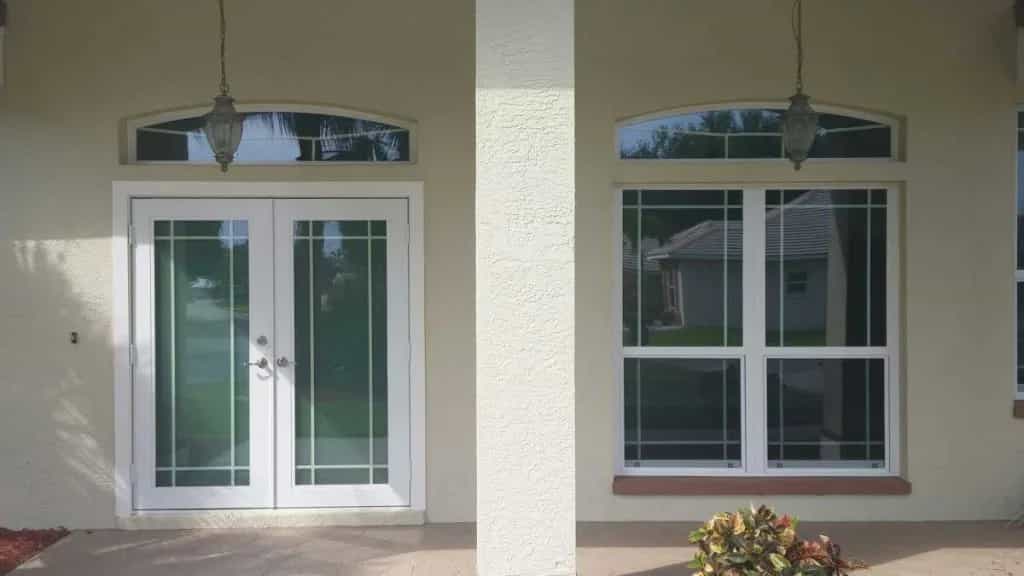
The largest category, and where most homeowners use their grant. Eligible products must carry a Florida Product Approval (FL#) or Miami-Dade Notice of Acceptance (NOA) and meet the wind-pressure rating for your specific address. Approved upgrades include:
- Impact-resistant windows (laminated glass with reinforced frames)
- Impact-resistant entry doors, French doors, sliding glass doors, and patio doors
- Impact-rated garage doors
- Hurricane shutters — accordion, roll-down, Bahama, colonial, and approved fabric panels
Roof Reinforcements
Roof improvements that help the deck stay attached during hurricane wind uplift:
- Roof-to-wall connection upgrades (hurricane straps and clips)
- Secondary water-resistance barrier (peel-and-stick underlayment under the shingles)
- Roof deck nailing pattern improvements
- Gable end bracing
What's not covered: aesthetic upgrades like replacement siding, gutter guards, generators, soffit and fascia repairs, or non-impact-rated standard windows.
How Much Money Can You Actually Get?
The state cap is $10,000 — but how much a homeowner actually receives depends on the project scope and the match ratio.
The state cap is $10,000 — but how much a homeowner actually receives depends on the project scope and the match ratio. Two real-world scenarios:
Scenario 1: Full Window Replacement on a 1,500 sq ft Home
A typical 8–12 window install on a single-story Broward home runs $14,000–$20,000 with HVHZ-rated impact windows. With the 2:1 match, the homeowner pays $5,000 out of pocket; MSFH contributes the $10,000 cap. Total project: $15,000.
Scenario 2: Garage Door + Front Door Hardening
A common smaller project — replacing the most-vulnerable openings (garage door and front entry) — usually runs $4,500–$6,500. With 2:1 matching, the homeowner pays roughly $1,800 and MSFH contributes $3,600. Project total: ~$5,400. The remaining state allocation can be used in a future cycle if the homeowner re-applies.
The 8-Step Application Process
The flow is the same across every recent funding cycle: ### 1. Apply Online Submit the application through the MSFH portal at mysafeflhome.com.
The flow is the same across every recent funding cycle:
1. Apply Online
Submit the application through the MSFH portal at mysafeflhome.com. You'll need your property appraiser parcel ID, current insurance declaration page, and government-issued ID.
2. Receive Eligibility Determination
DFS reviews the application and confirms eligibility. This typically takes 2–6 weeks during active funding cycles.
3. Schedule the Wind Mitigation Inspection
A state-contracted inspector visits the home and produces the OIR Form 1802. Cost: $0 to the homeowner.
4. Receive the Inspection Report
The report identifies which mitigation improvements are recommended and would qualify for grant funding. Send a copy to your insurance carrier — even without doing the work, mitigation discounts apply.
5. Choose Approved Contractors
Contractors must be licensed Florida General Contractors with the trade authority for the work. They don't have to be on a state list, but they must pull permits and use FL-approved or Miami-Dade NOA products.
6. Submit the Grant Application
With contractor quotes in hand, submit a grant application showing scope, costs, and selected products. DFS issues an award letter committing the matching funds.
7. Complete the Work
The contractor pulls the permit, installs the products, and passes final inspection with the local building department.
8. Submit for Reimbursement
After final inspection sign-off, submit final invoices, the inspection result, and product approvals through the portal. Reimbursement typically arrives within 60–90 days.
Common Mistakes That Delay or Disqualify Applications
After helping South Florida homeowners through multiple MSFH cycles, the patterns repeat: - Starting work before the award letter.
After helping South Florida homeowners through multiple MSFH cycles, the patterns repeat:
- Starting work before the award letter. Any product purchased or installed before the grant is approved is ineligible — even with valid receipts.
- Choosing a non-FL-approved product. Even high-quality impact windows from out-of-state manufacturers may not have a Florida Product Approval number, and MSFH won't reimburse without one.
- Skipping the permit. No permit, no reimbursement. Every covered improvement must be pulled and inspected through the local building department.
- Mixing eligible and ineligible work. If a contractor invoices a $20,000 job that includes $15,000 of impact windows and $5,000 of unrelated remodeling, the entire invoice can be flagged. Keep the MSFH-eligible work on a separate contract.
- Letting the award lapse. Award letters typically have a 12-month completion window. Missing the deadline forfeits the funds.
Insurance Discount on Top of the Grant
The wind mitigation inspection report you receive triggers separate discounts on your homeowners insurance premium — independent of the MSFH grant.
The wind mitigation inspection report you receive triggers separate discounts on your homeowners insurance premium — independent of the MSFH grant. Florida law (s. 627.0629) requires every windstorm-rated insurer to offer specific premium credits when a home has:
- Impact-rated opening protection on every opening (windows, doors, garage doors, skylights)
- A hip-shaped roof rather than a gable
- Roof-to-wall connections rated as "single wraps" or "double wraps"
- A secondary water resistance barrier
- Modern roof deck attachment standards
A typical South Florida home with full impact-rated opening protection plus the strongest roof attachment configuration sees a 30–45% reduction in the wind portion of the premium — often $800–$2,400 per year, every year, for as long as the products remain in service.
2026 Status & What to Watch For
MSFH is treated as an annual budget line — funding gets renewed (or expanded) in each Florida legislative session.
MSFH is treated as an annual budget line — funding gets renewed (or expanded) in each Florida legislative session. Application portals open within weeks of the bill being signed and close when the appropriated funds are committed. The Department of Financial Services posts cycle status updates at mysafeflhome.com.
If you're planning impact-rated upgrades in 2026, check the portal status before signing a contract. If a cycle is open, apply first; if not, line up your contractor and have everything ready for the next opening.
Frequently Asked Questions
### Who qualifies for My Safe Florida Home Program? Florida homeowners with a single-family, site-built primary residence valued at $500,000 or less, with active…
Who qualifies for My Safe Florida Home Program?
Florida homeowners with a single-family, site-built primary residence valued at $500,000 or less, with active windstorm insurance, located in a wind-borne debris region. The 2025-2026 cycle prioritizes income-qualifying applicants (typically below 80% area median income) and seniors. Condos, mobile homes, rentals, and second homes are not eligible.
What is the $10,000 grant for Florida homeowners?
The MSFH matching grant pays up to $10,000 in state funds toward hurricane mitigation improvements — impact windows, impact doors, impact garage doors, hurricane shutters, and roof reinforcements. The match ratio is typically $2 in state funds for every $1 the homeowner spends, so a $5,000 homeowner contribution unlocks the full $10,000 match for a $15,000 total project.
Is My Safe Florida Home still active?
Yes. The 2025-2026 cycle reopened with $352 million in new appropriations. Funding cycles open and close as appropriations get committed, so check mysafeflhome.com for current portal status before applying.
How much does My Safe Florida Home pay?
The state cap is $10,000 per home. Actual payment depends on project scope and the 2:1 match ratio. A homeowner who spends $5,000 of their own money receives the full $10,000 match. Smaller projects receive proportionally less — the program reimburses against actual completed and inspected work, not the awarded ceiling.
Can I use My Safe Florida Home for an HOA-controlled condo?
No. MSFH is restricted to single-family, site-built homes you personally own and live in. Condo unit owners and townhouse owners (in multi-unit structures) aren't eligible regardless of association approval.
Does the grant cover labor or just materials?
Both. The 2:1 match applies to the total project cost — products, labor, permit fees, and disposal of removed materials.
Can I keep the inspection report's discount even if I don't use the grant?
Yes. The wind mitigation inspection is yours to keep. Submit the OIR Form 1802 to your insurance carrier separately from any grant decision and the discounts apply for as long as the home configuration matches the report.
What happens if I sell the home before reimbursement?
The grant is tied to the property and the homeowner of record at award. Sales between award and reimbursement complicate the process — most homeowners coordinate the closing date around the reimbursement timeline.
Are SafeGuard's products approved for MSFH grants?
Yes. Every impact window and impact door SafeGuard installs carries either a Florida Product Approval number or a Miami-Dade NOA — the two acceptable approval paths under MSFH rules. We pull the permit on every job and provide the documentation packet you need for reimbursement. Request a free MSFH-eligible estimate and we'll quote your project with grant matching in mind.
Free Estimate
Ready to start your project?
Tell us about your home and project. We'll get back to you within 24 hours with a free, no-obligation estimate from our licensed South Florida team.
- Licensed & Insured FL Contractor
- Local crew, no subcontractors
- Free, no-obligation estimate
- We respond within 24 hours
SafeGuard Impact Windows, Doors & Roofing
Sources & References
External authorities cited in this article. Verify the latest published version of any building code or product approval directly with the issuing agency.
From the Blog
Continue Reading
My Safe Florida Home Program 2025-2026 — Step-by-Step Application Guide
Exactly how to apply for the 2025-2026 My Safe Florida Home grant cycle — eligibility check, wind mitigation inspection, contractor quotes, award letter, install, and reimbursement timing.
Read articleMy Safe Florida Home Grant — Eligibility, Match Rules & Timeline (2025-2026)
Who qualifies for the 2025-2026 My Safe Florida Home grant, the 2:1 match math, what's covered, and how long award-to-reimbursement actually takes.
Read articleMy Safe Florida Home Income Limits & Inspection Requirements (2025-2026)
2025-2026 cycle income brackets, priority tiers, and the wind mitigation inspection details. What documents you need, how AMI is calculated, and which inspection findings trigger grant approval.
Read article