
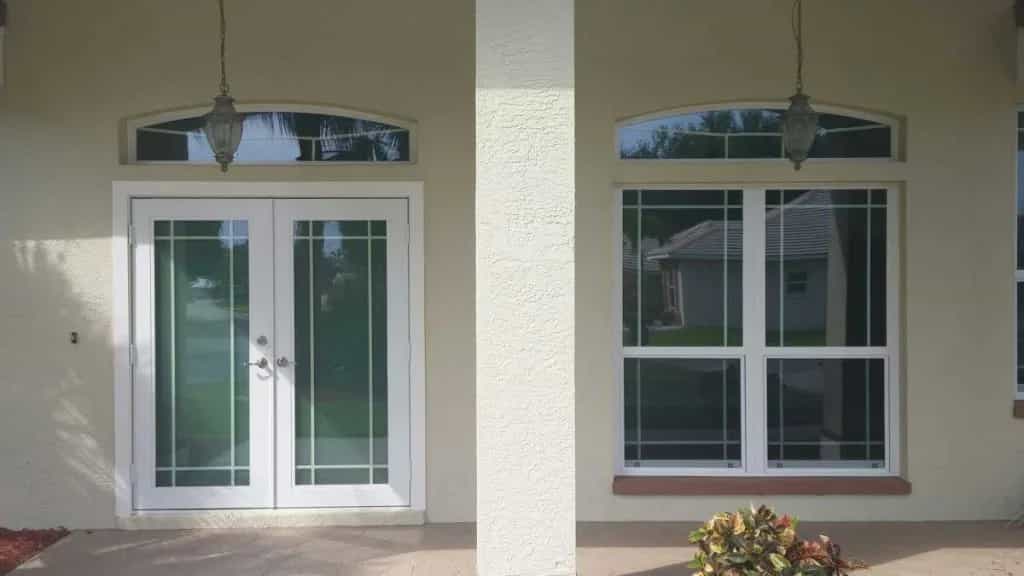
My Safe Florida Home Grant — Eligibility, Match Rules & Timeline (2025-2026)
Who qualifies for the 2025-2026 My Safe Florida Home grant, the 2:1 match math, what's covered, and how long award-to-reimbursement actually takes.
The My Safe Florida Home grant pays up to $10,000 of state-matched funds toward hurricane-mitigation improvements on a Florida primary residence. The 2025-2026 cycle was funded at $352 million and includes income-priority rules that didn't exist in earlier cycles. This guide breaks down exactly who qualifies, how the 2:1 match math works against a real install bill, and the realistic award-to-reimbursement timeline based on contractor experience across multiple cycles.
For step-by-step instructions on actually submitting the application, see our application walkthrough. For program background and overall context, see the complete MSFH guide. This post focuses narrowly on the grant — eligibility tests, match calculations, and timing.
Who Qualifies for the 2025-2026 Grant Cycle
Five eligibility tests, all of which must pass: ### 1. Property Type Single-family, site-built (stick-built or block) detached home.
Five eligibility tests, all of which must pass:
1. Property Type
Single-family, site-built (stick-built or block) detached home. The home must be on its own parcel. Excluded property types:
- Condominiums (regardless of square footage or stand-alone appearance)
- Townhouses inside multi-unit structures
- Mobile homes and manufactured homes
- Modular homes
- Multifamily duplexes/triplexes/quadplexes
2. Owner-Occupancy
The home must be the applicant's primary residence — homestead-exempted on the property tax roll. Second homes, vacation homes, and rental properties don't qualify, even if the owner is a Florida resident with another homestead.
3. Insured Value Cap
The home's insured value (per the most recent dwelling-coverage limit on your homeowners insurance policy) must be $500,000 or less. The 2025-2026 cycle preserved this cap from prior cycles. Higher-value homes can still get the free wind mitigation inspection but aren't eligible for the matching grant.
4. Wind-Borne Debris Region
The home must be in a Florida wind-borne debris region — most of the state south of I-4 and along the Atlantic and Gulf coasts. Inland counties in the panhandle and central-north Florida have limited eligibility. The application portal validates this against your property address automatically.
5. Active Windstorm Coverage
You must carry homeowners insurance with windstorm coverage at the time of application and through reimbursement. Citizens Property Insurance policyholders qualify; surplus-lines and self-insured homes don't.
The 2025-2026 Income-Priority Rules
A change introduced in this cycle: applications get processed in priority order, not pure first-come-first-served.
A change introduced in this cycle: applications get processed in priority order, not pure first-come-first-served. The priority tiers (subject to legislative refinement each session) generally rank:
- Tier 1: Households at or below 80% of the area median income (AMI) for their county, OR seniors aged 60+ regardless of income
- Tier 2: Households at or below 100% AMI
- Tier 3: All other eligible homeowners — processed only after higher tiers are funded
Income is verified against the most recent federal tax return. A two-person household in Broward County (2025 AMI: ~$98,000) needs total household income at $78,400 or less to hit Tier 1. The portal calculates your tier automatically when you submit tax documentation.
Practical implication: if you're in Tier 1, apply on day one of the cycle — your application will likely be reviewed and approved before Tier 3 funds even open. If you're in Tier 3, you can still apply but should expect a longer wait.
The 2:1 Match: How the Money Actually Works
The state contributes $2 for every $1 the homeowner spends on eligible mitigation work, capped at $10,000 in state funds.
The state contributes $2 for every $1 the homeowner spends on eligible mitigation work, capped at $10,000 in state funds. The math at common project sizes:
Math Examples
- $1,500 homeowner spend → $3,000 state match → $4,500 total project
- $2,500 homeowner spend → $5,000 state match → $7,500 total project
- $5,000 homeowner spend → $10,000 state match (cap) → $15,000 total project
- $8,000 homeowner spend → $10,000 state match (cap, not $16,000) → $18,000 total project
- $15,000 homeowner spend → $10,000 state match (cap) → $25,000 total project (homeowner absorbs $15K)
The sweet spot is $5,000 of homeowner contribution. Spending less leaves match money on the table; spending more doesn't unlock additional state funds. A whole-home impact-window install on a typical Broward home runs $14,000–$20,000 — perfectly sized to hit the cap.
What Happens If the Project Comes In Under the Awarded Amount
If your award letter approves $10,000 in state matching for a $15,000 quoted project, but the actual final invoice is $13,500, the match still applies at the 2:1 ratio. Final state contribution: $9,000 (2/3 of $13,500). You don't get the unused $1,000 in cap room.
What's Specifically Eligible
The grant covers products and labor in these categories:
- Impact-resistant windows with FL Product Approval or Miami-Dade NOA
- Impact-rated entry doors, sliding glass doors, French doors, and patio doors
- Impact-rated garage doors
- Hurricane shutters — accordion, roll-down, Bahama, colonial, fabric panels
- Roof-to-wall connection upgrades (hurricane straps, clips)
- Secondary water-resistance barrier under the roof shingles
- Roof deck nailing pattern improvements
- Gable end bracing
What's Specifically Not Eligible
- Standard (non-impact) windows or doors
- Window film or security film overlays
- Replacement siding, soffits, or fascia
- Generators, solar panels, or other electrical work
- Full roof replacement (just the mitigation components)
- Aesthetic upgrades (interior trim, paint, hardware)
- Anything purchased or installed before the award letter date
The Award-to-Reimbursement Timeline
After your application is approved and you receive the award letter, here's the realistic timeline: ### Award Letter to Permit Pull: 1-3 Weeks The contractor…
After your application is approved and you receive the award letter, here's the realistic timeline:
Award Letter to Permit Pull: 1-3 Weeks
The contractor submits the permit application to your local building department. Review time varies by county — Miami-Dade and Broward typically issue impact-window permits within 5-10 business days. Palm Beach is similar. Smaller cities can be faster; some run 2-3 weeks during peak season.
Permit to Install Complete: 1-2 Weeks
For a typical 8-12 window job, on-site installation runs 3-5 days. Add scheduling lead time and material delivery. Custom-sized impact windows ordered against the award letter can have 4-8 week production lead time on the manufacturer side — factor that into the project start date.
Install Complete to Final Inspection: 1-2 Weeks
The contractor schedules the local building department's final inspection. Timing depends on inspector availability — same as the permit-pull side, Miami-Dade and Broward run faster than smaller jurisdictions.
Final Inspection to Reimbursement Submission: Same Week
The contractor delivers the documentation packet (paid invoices, permit card, product approvals, photos) within 3-5 business days of the inspection passing. The homeowner uploads it to the MSFH portal.
Submission to Reimbursement Deposit: 8-12 Weeks
DFS audits the packet, verifies the work scope matches the award letter, and issues reimbursement by ACH directly to the homeowner. This is the longest single phase. Don't rely on the reimbursement to pay the contractor — the contractor expects payment at install completion, not at reimbursement.
Total Realistic Timeline
From award letter to reimbursement deposit: 4-6 months. From the original application submission: 9-12 months in a typical funding cycle. The application-review side (before the award) is the slowest variable; once the award arrives, the project moves on a predictable contractor timeline.
The Most Common Reasons Awards Get Reduced or Denied
Across MSFH cycles, the consistent reasons reimbursements come in lower than the awarded amount or get denied entirely: - Contractor change after award.
Across MSFH cycles, the consistent reasons reimbursements come in lower than the awarded amount or get denied entirely:
- Contractor change after award. If you switch contractors after the award letter is issued, the new contractor's quote needs to be re-approved. Some homeowners don't realize this until reimbursement and find their new contractor's products weren't in the approved scope.
- Product substitution. If supply-chain issues force a different model than what was on the original quote, the substitution must be re-approved before final installation. Substitutions that happen after the fact are often disallowed at audit.
- Mixing eligible and ineligible work. Replacing 8 windows + adding a screen room? Make those two separate contracts. The MSFH-eligible windows have their own paper trail; the screen room is the homeowner's own remodeling spend.
- Failed final inspection. If the building department finds the install non-compliant and requires correction work, the reimbursement is held until re-inspection passes. This can add 4-6 weeks.
- Insurance lapse during the project. If your homeowners insurance renewal happens mid-project and you don't keep windstorm coverage active, the entire grant can be voided. Renewal letters get attention during MSFH projects for this reason.
Frequently Asked Questions
### Is there an income limit for My Safe Florida Home grant? There's no hard income cap, but the 2025-2026 cycle uses income-based priority tiers.
Is there an income limit for My Safe Florida Home grant?
There's no hard income cap, but the 2025-2026 cycle uses income-based priority tiers. Tier 1 (≤80% AMI or seniors 60+) gets processed first. Tier 3 (everyone else) is processed only after higher tiers are funded. Any household income level can technically apply.
What is the maximum I can receive in grant funds?
$10,000 in state matching funds per home. Combined with the homeowner's $5,000 contribution to hit the cap, that's a $15,000 total project ceiling at the 2:1 match ratio. Larger projects are still eligible — the homeowner just absorbs costs above the cap.
Do I need to use a specific contractor for the grant?
No. There's no state-issued contractor list. The contractor must be Florida-licensed (CGC, CRC, or CCC depending on scope) and use products with FL approval numbers or Miami-Dade NOAs. Beyond that, you choose any contractor.
How long does the award letter remain valid?
Typically 12 months from issue. The work must be permitted, completed, and submitted for reimbursement within that window or the award is forfeited. Extensions are sometimes granted for documented supply-chain delays — request in writing through the portal.
Can I apply again in a future cycle if I've already received a grant?
You can apply again, but only for additional improvements not previously funded. If the first grant covered impact windows, a second-cycle grant could cover impact doors or roof reinforcements at the same property. The $10,000 cap resets per cycle, so multi-cycle homeowners can stack funds across improvement categories.
What documentation do I need to keep after reimbursement?
Hold every document for at least 7 years. DFS retains audit rights and can claw back funds if the work is later found to be non-compliant. Contractor lien releases, paid invoices, permit cards, and product approval certificates should all stay in your homestead file.
Ready to Estimate Your Project Against the Match Cap?
If you've received an award letter or are planning a project around the 2:1 match math, we'll quote your impact-window or impact-door install with the cap in mind…
If you've received an award letter or are planning a project around the 2:1 match math, we'll quote your impact-window or impact-door install with the cap in mind — sized to maximize your match without leaving money on the table. Request a free MSFH-aware estimate and we'll walk through which scope hits exactly $5,000 of homeowner contribution. For pricing context against typical South Florida costs, see our impact window cost breakdown.
Free Estimate
Ready to start your project?
Tell us about your home and project. We'll get back to you within 24 hours with a free, no-obligation estimate from our licensed South Florida team.
- Licensed & Insured FL Contractor
- Local crew, no subcontractors
- Free, no-obligation estimate
- We respond within 24 hours
SafeGuard Impact Windows, Doors & Roofing
From the Blog
Continue Reading
My Safe Florida Home — Complete 2025-2026 Cycle Homeowner's Guide
My Safe Florida Home 2025-2026 cycle — $352M approved, new income-priority rules, free wind mitigation inspection, and matching grants up to $10,000 for impact windows, doors, and roof upgrades.
Read articleMy Safe Florida Home Program 2025-2026 — Step-by-Step Application Guide
Exactly how to apply for the 2025-2026 My Safe Florida Home grant cycle — eligibility check, wind mitigation inspection, contractor quotes, award letter, install, and reimbursement timing.
Read articleMy Safe Florida Home Income Limits & Inspection Requirements (2025-2026)
2025-2026 cycle income brackets, priority tiers, and the wind mitigation inspection details. What documents you need, how AMI is calculated, and which inspection findings trigger grant approval.
Read article