
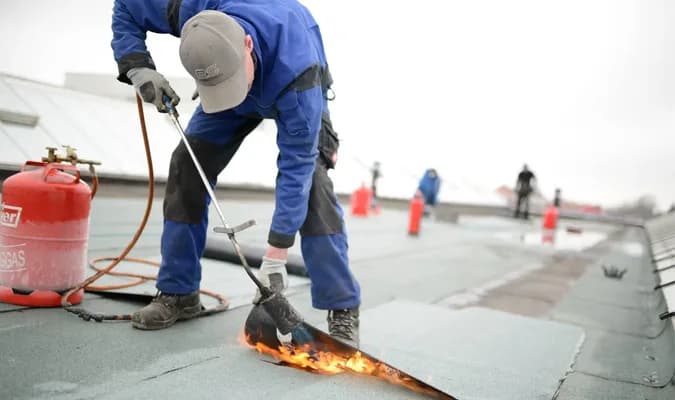
Carlisle · GAF · Mule-Hide certified installer
Manufacturer-certification status matters on commercial flat-roof. Our certifications mean the manufacturer's NDL warranty is available on our installs and the warranty service is direct.
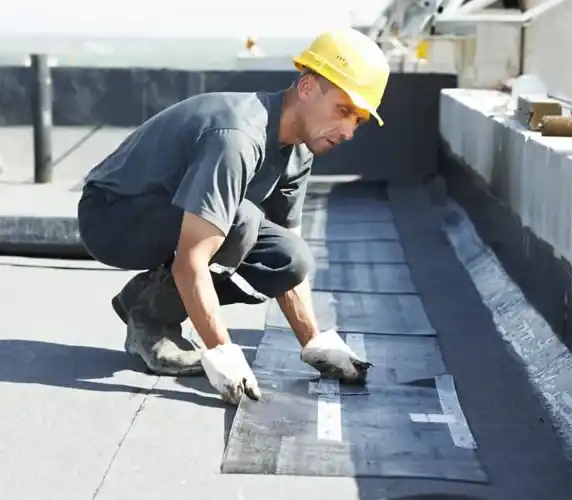
Flat-roof systems — TPO single-ply membrane, modified bitumen, and built-up restoration coatings — cover commercial properties, residential additions, lanai roofs, and any roof slope under 2:12 pitch. SafeGuard installs Carlisle, Mule-Hide, and GAF flat-roof systems under FL DBPR Roofing Contractor license CCC1336241 with Florida Product Approval verified per membrane + adhesive + flashing.
Reviews
Commercial · cool-roof · low-slope
Manufacturer-certification status matters on commercial flat-roof. Our certifications mean the manufacturer's NDL warranty is available on our installs and the warranty service is direct.
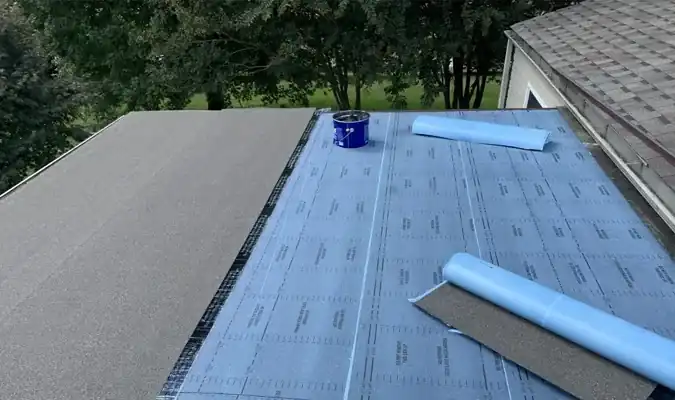
Florida requires a Certified Roofing Contractor license to pull a flat-roof permit. SafeGuard files under FL DBPR CCC1336241 with Florida Product Approval verified per membrane + adhesive + flashing detail.
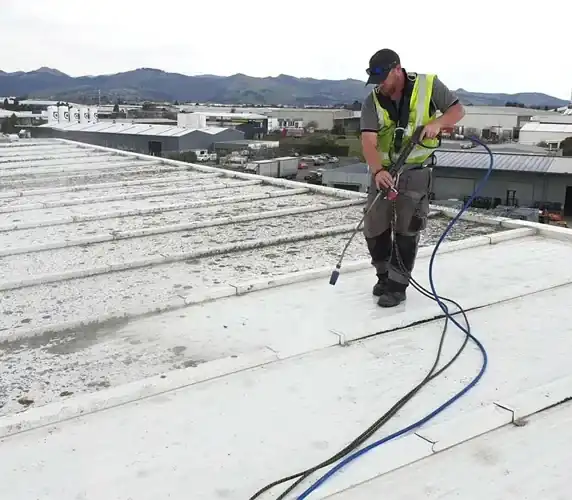
TPO, modified bitumen, and restoration coatings — we install all three categories. Right system is determined by the building, the hold timeline, and the budget — not by what we happen to be selling that week.
At a Glance
Slopes under 2:12 pitch — lanai covers, commercial buildings, residential additions, low-slope main roofs — need a membrane system, not shingles. SafeGuard installs two primary flat-roof systems: TPO single-ply membrane and modified bitumen, both carrying Florida Product Approval under HVHZ (High-Velocity Hurricane Zone) wind requirements. This page breaks down how each system is built, what it costs, where it makes sense, and how the installation pathway runs from permit to final inspection. If you're still choosing between roof types across the full spectrum, the South Florida roofing pillar covers every system we install.
Flat roof installation in South Florida requires compliance with FM 1-90 uplift standards (Factory Mutual's benchmark for membrane pull-off resistance) and ASCE 7-22 (the structural load standard that sets design wind speeds by county and exposure category). In Miami-Dade and Broward, that translates to a 120 mph design wind minimum — higher than most of the country — which is why membrane attachment method matters as much as the membrane itself. Mechanically fastened TPO won't carry the same FM 1-90 rating as a fully-adhered or induction-welded assembly, and the permitting office knows the difference.
Florida Product Approval is the state-level certification that confirms a roofing assembly has been tested to TAS 201, 202, and 203 standards (impact, cyclic pressure, and static air infiltration, respectively). Every system we propose comes with a current Product Approval number you can verify in the Florida Building Code product approval database before signing anything. Contractor credentials are equally searchable — our license (CCC1336241) is on record with the Florida DBPR contractor lookup.
Built-up roofing (BUR) — the old-school multi-ply asphalt, felt, and gravel system — still exists on plenty of South Florida rooftops, but we classify it as a replacement category, not a new-install option. When we tear off a BUR system, the replacement goes in as either TPO or modified bitumen unless a structural engineer specifies otherwise.
Any pitch below 2 inches of rise per 12 inches of run sheds water too slowly for shingles or tile. A membrane system is the code-appropriate and warranted solution.
Retail, warehouse, and multi-family structures routinely use TPO single-ply for its light weight, energy efficiency, and No Dollar Limit (NDL) warranty availability on commercial assemblies.
Covered lanais, screened enclosures with solid roofs, and room additions almost always tie into a flat or low-slope section. The residential roof installation overview covers how these sections integrate with the main pitched roof.
HVAC curbs and rooftop equipment pads require a continuous membrane field with properly flashed penetrations — a detail modified bitumen handles cleanly with its torch-applied cap sheet.
When decking and fasteners are structurally intact, a silicone or acrylic liquid-applied restoration coating can extend service life 10-15 years without a full tear-off — a cost-effective option on large commercial roofs.
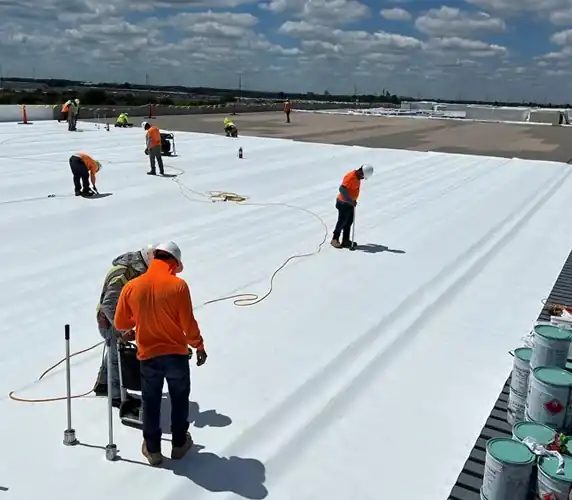
TPO single-ply membrane is manufactured as thermoplastic polyolefin sheets — typically 45, 60, or 80 mil thickness — that are heat-welded at every seam using a hot-air welder running at 700°F or higher. The weld fuses the sheets into a monolithic, watertight surface rather than relying on adhesive or tape that can fail over time in South Florida's heat. The major manufacturers we source from include Carlisle SynTec (the largest TPO producer in North America), GAF EverGuard, Mule-Hide, and Versico — all of whom offer current Miami-Dade Notice of Acceptance (NOA) listings, which you can confirm in the Miami-Dade NOA database.
White TPO carries a solar reflectance of 80% or better — compare that to the roughly 10% reflectance of traditional black asphalt surfaces. On a South Florida rooftop baking through a July afternoon, that difference is measurable on an electric bill. The Department of Energy has documented summer cooling-load reductions of 10-15% on reflective-membrane commercial roofs versus dark-surface alternatives, and the effect scales to residential flat sections too.
Warranty depth varies by assembly and thickness. Standard manufacturer warranties run 20 years; NDL (No Dollar Limit) options — which cover the full cost of repair including labor, not just materials — are available on commercial projects meeting manufacturer-specified installation protocols. We file every TPO project under the manufacturer's registered contractor program so the warranty transfers cleanly to a future buyer.
Modified bitumen is SBS- or APP-modified asphalt built up in two or three plies, either torch-applied or self-adhered. SBS (styrene-butadiene-styrene) gives the sheet rubber-like flexibility at low temperatures and better elongation, which matters when South Florida's daily thermal cycling causes decking to expand and contract. APP (atactic polypropylene) formulations skew toward high-temperature resistance — relevant on west-facing rooftops that absorb afternoon sun. The manufacturers we use most often are GAF Ruberoid, Polyglass, and Soprema, each with HVHZ-rated assemblies on file.
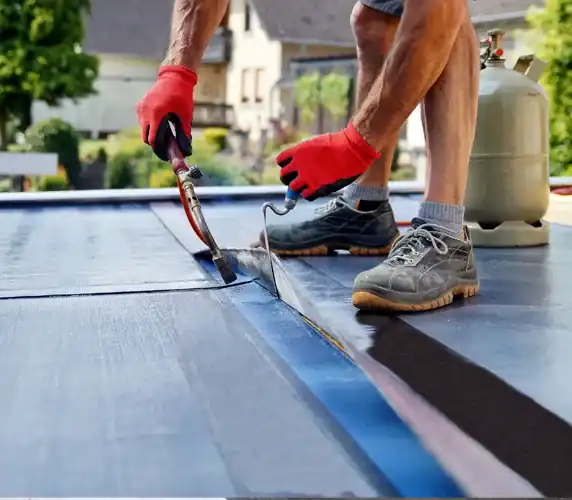
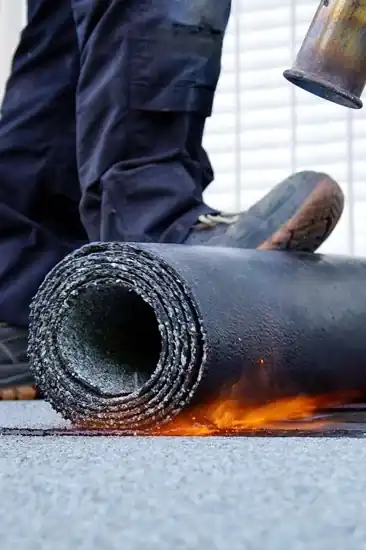
A two-ply modified bitumen system typically consists of a base sheet mechanically fastened or adhered to the deck, followed by a granule-surfaced cap sheet that provides UV protection and surface durability. Torch application fuses each ply at the laps and at all perimeter terminations and penetrations. Self-adhered cap sheets — used in situations where open flame is restricted (occupied buildings, certain occupancy classifications) — rely on a factory-applied adhesive layer activated by heat or pressure.
Modified bitumen systems price out between $7 and $15 per square foot installed, depending on ply count, deck condition, and access difficulty. They're a strong choice on residential flat roofs where the roof area is relatively small and the homeowner wants a field-proven system with a long track record in this specific climate. For projects that involve a full commercial property, the commercial roof installation page covers multi-system procurement and phased re-roofing programs.
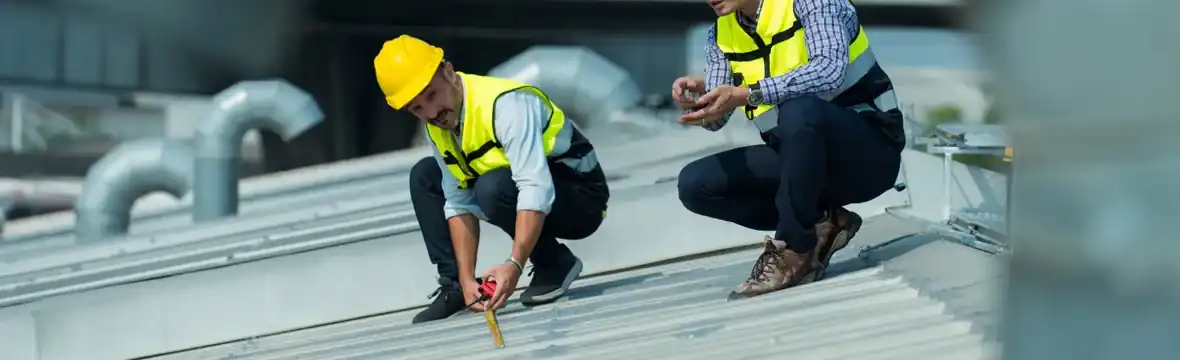
A field visit confirms deck condition, existing slope, drainage pattern, and any penetrations. We pull core samples on suspect areas to check for moisture intrusion before proposing TPO, modified bitumen, or — if the existing membrane is structurally sound — a restoration coating. You can request a free flat-roof assessment to schedule this visit.
We submit the permit package to the applicable county building department with the manufacturer's current Florida Product Approval number attached. Miami-Dade projects additionally require an approved NOA on file. Plan review typically runs 1–3 weeks depending on the municipality and project scope.
Existing membrane and insulation come off. The deck is inspected board by board — any soft or delaminated sections get replaced before the new assembly goes down. This is where hidden moisture damage shows up, and we document everything photographically for the inspector.
TPO assemblies: insulation boards are adhered or mechanically fastened, then the membrane is rolled out, heat-welded at seams (minimum 1.5-inch weld width per FM standards), and fully terminated at parapets, curbs, and drains. Modified bitumen: base sheet is secured first; cap sheet follows by torch or self-adhered method. All flashings are installed in the same visit.
The county inspector performs a final review — we're present at every inspection. Once approved, we register the assembly with the manufacturer under our contractor number so the warranty is active from day one. Homeowners interested in spreading the project cost can review financing options with 0% promotional terms.
| Flat Roof (TPO / Mod Bit) | Pitched Roof Alternatives | |
|---|---|---|
| Required slope | Under 2:12 — the system is designed for low-slope drainage | [Asphalt shingle](/shingle-roof-installation/) needs 4:12+; [tile](/tile-roof-installation/) and [standing seam metal](/metal-roof-installation/) from 2:12–3:12 depending on manufacturer |
| Energy performance | TPO white membrane: 80%+ solar reflectance, meaningful cooling-load reduction | Tile and light-colored metal offer good reflectance; dark shingles typically 10–20% |
| Wind rating | 120 mph FM 1-90 rated assemblies; fully adhered systems perform at higher thresholds | Standing seam metal can reach 160+ mph; tile and shingle vary by attachment method |
| Warranty depth | 20–30 yr manufacturer; NDL options on commercial TPO | Metal: 40–50 yr paint warranty; tile: 50-yr limited; shingle: 25–30 yr |
| Cost range (installed) | TPO $8–$18/sq ft; modified bitumen $7–$15/sq ft | Shingle $6–$12/sq ft; tile $15–$30/sq ft; standing seam metal $18–$35/sq ft |
| Best use case | Commercial buildings, lanais, additions, any low-slope section | Pitched residential main roofs — wrong product category for slopes under 2:12 |
Flat roofing fails most often at details, not field membrane: edge metal that isn't properly embedded, drain sumps that weren't set below the field elevation, or flashings that were rushed and left unbonded. An improperly welded TPO seam can delaminate within a season; an undertorched modified bitumen lap looks fine until the first sustained rain. The best way to evaluate a contractor before signing is to ask for the manufacturer's registered contractor certificate, pull their license on the Florida DBPR contractor lookup, and confirm the proposed assembly carries current Florida Product Approval.
Lead times currently run 3–6 weeks from signed contract to installation start on residential projects; commercial projects that require submittals, shop drawings, or multiple bid rounds add 2–4 weeks to the permit phase. Restoration coatings move faster — often 1–2 weeks to mobilization — because many jurisdictions issue them under a roofing permit rather than a new-construction review.
For homeowners comparing membrane options against full pitched-roof systems on a property that has both a flat addition and a sloped main roof, the residential roof installation overview explains how we scope and sequence combination projects. On the commercial side, the commercial roof installation page covers multi-building portfolios, phased replacement schedules, and preventive maintenance programs.
From our project library
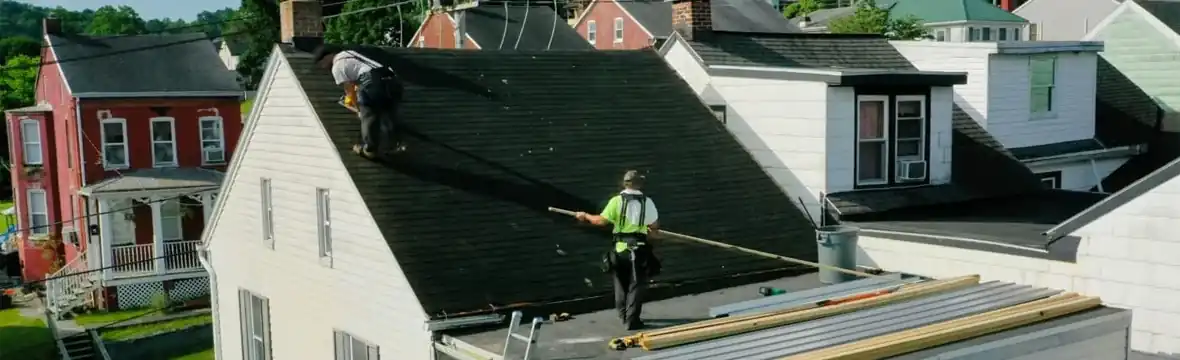
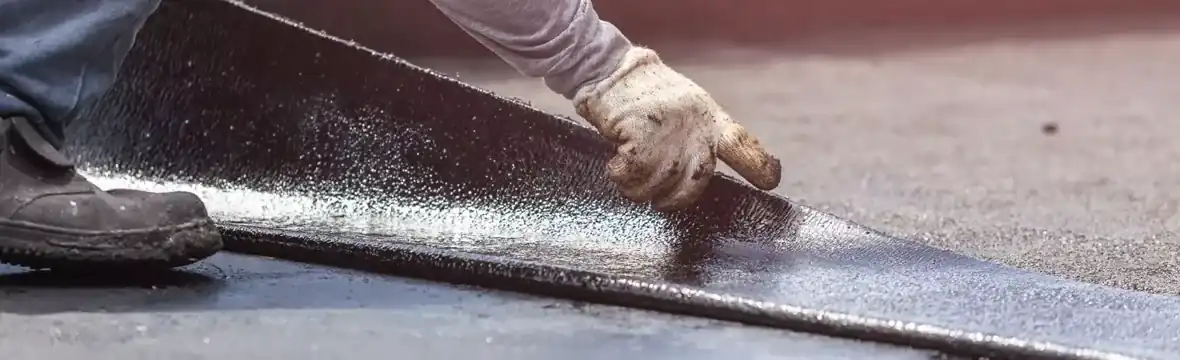
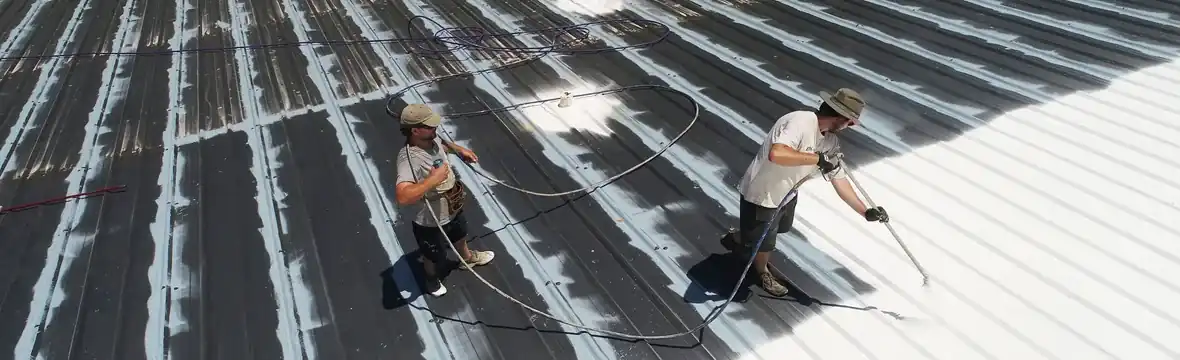
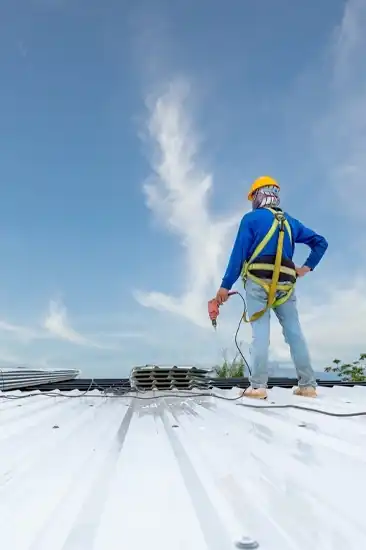
Real SafeGuard flat-roof installs from the JobNimbus library — TPO + modified bitumen on commercial and residential addition projects.
Project scope
Carlisle SynTec, GAF EverGuard, Mule-Hide TPO systems. White-reflective cool-roof for commercial and industrial properties — 20-30 year warranty, NDL options.
Learn moreTorch-applied or self-adhered SBS/APP-modified bitumen for replacement on existing flat-roof systems. Heavy-traffic durability + 20-25 year lifespan.
Learn moreSilicone or acrylic liquid-applied restoration on a structurally sound existing membrane. Extends life 10-15 years at ~30-50% the cost of full tear-off.
Learn moreTPO or modified bitumen on residential additions, lanai roofs, and any pitch under 2:12 where shingle/tile/metal can't be used.
Learn moreFor pitched portions of mixed-roof commercial or residential properties. 50+ year lifespan, max insurance discount.
Learn moreFull commercial roofing — flat-roof systems, restoration coatings, modified bitumen, plus structural roof-deck + insulation work. Florida Product Approval verified.
Learn moreFrequently asked
A properly installed TPO single-ply membrane in South Florida carries a 20–30 year manufacturer warranty; fully adhered assemblies with 60-mil or 80-mil membrane typically reach the upper end of that range. Modified bitumen systems run 15–25 years depending on ply count and surface condition. Both figures assume annual drain clearing and prompt repair of any penetration damage — UV intensity and standing water from South Florida's rain season are the primary aging factors. Regular inspections every 2–3 years catch minor issues before they void the warranty.
TPO single-ply is generally the better choice for larger flat sections and any commercial application because of its 80%+ solar reflectance, NDL warranty options, and lower installed cost per square foot ($8–$18). Modified bitumen at $7–$15/sq ft is a strong pick on smaller residential flat roofs — lanais, additions — where its multi-ply redundancy and track record in Miami-Dade's climate are reassuring. The honest answer depends on slope, drainage, deck condition, and budget: our assessment visit is specifically designed to make that call with actual field data from your roof.
Yes. Any flat roof tear-off and re-roof in Miami-Dade requires a building permit and a current Florida Product Approval (NOA) on the proposed assembly. Miami-Dade's High-Velocity Hurricane Zone designation means the county maintains its own NOA database separate from the state system — both must be satisfied. Restoration coatings on existing structurally-sound membranes are typically permitted under a simpler roofing permit, but a permit is still required. SafeGuard handles the full permit application and is present at every county inspection.
Broward County falls within Florida's HVHZ (High-Velocity Hurricane Zone), requiring a minimum 120 mph design wind speed per ASCE 7-22 and FM 1-90 uplift compliance for membrane assemblies. The attachment method — mechanical fastening, full adhesion, or induction welding — determines which FM 1-90 rating the assembly achieves. Fully adhered TPO assemblies routinely test above 120 mph; mechanically fastened systems need fastener spacing engineered to the specific deck and building height. We specify the correct attachment pattern in the permit drawings.
Florida Building Code generally limits roofs to two total layers before a full tear-off is required. If you already have one existing layer and it passes a moisture scan and structural review, a recover may be permissible — but Palm Beach County building departments scrutinize recovers carefully, particularly on older buildings. Laying new membrane over wet insulation, which is common in aged flat roofs, is not code-compliant and voids manufacturer warranties. We always recommend a core sample before proposing a recover to avoid discovering that problem mid-project.
Installed costs in South Florida run $8–$18 per square foot for TPO single-ply and $7–$15 per square foot for modified bitumen. A 2,000 sq ft flat roof therefore ranges roughly $14,000–$36,000 depending on system choice, deck condition, number of penetrations, and attachment method. Restoration coatings on a 10,000 sq ft commercial roof typically run $30,000–$50,000 — significantly less than a full membrane replacement. The final number depends heavily on what the tear-off reveals; we scope that risk honestly in the initial assessment.
For TPO single-ply, we work with Carlisle SynTec, GAF EverGuard, Mule-Hide, and Versico — all carrying current Miami-Dade NOA listings. For modified bitumen, we source from GAF Ruberoid, Polyglass, and Soprema, each with HVHZ-rated assemblies on file. Manufacturer selection is driven by assembly rating, warranty tier needed, and product availability at the time of your project — we don't lock into a single brand because availability in post-storm periods can vary significantly across the South Florida market.
Free assessment that includes the system-comparison + lifecycle-cost analysis + full permit pathway in writing — sealed plans, FPA verification per membrane, Notice of Commencement, and dry-in plus final inspections.
Content Disclosure
This article is provided for general information only and reflects current Florida Building Code requirements, common South Florida construction practices, and SafeGuard's field experience. Actual project costs, permit requirements, material availability, and timelines vary based on your home, municipality, and project scope. Florida law requires that any residential construction work over $1,000 be performed by a licensed contractor — always consult a Florida-licensed contractor before starting an impact-window, impact-door, or roofing project and verify credentials at myfloridalicense.com. This guidance is not a substitute for a project-specific estimate or on-site evaluation by a licensed professional.