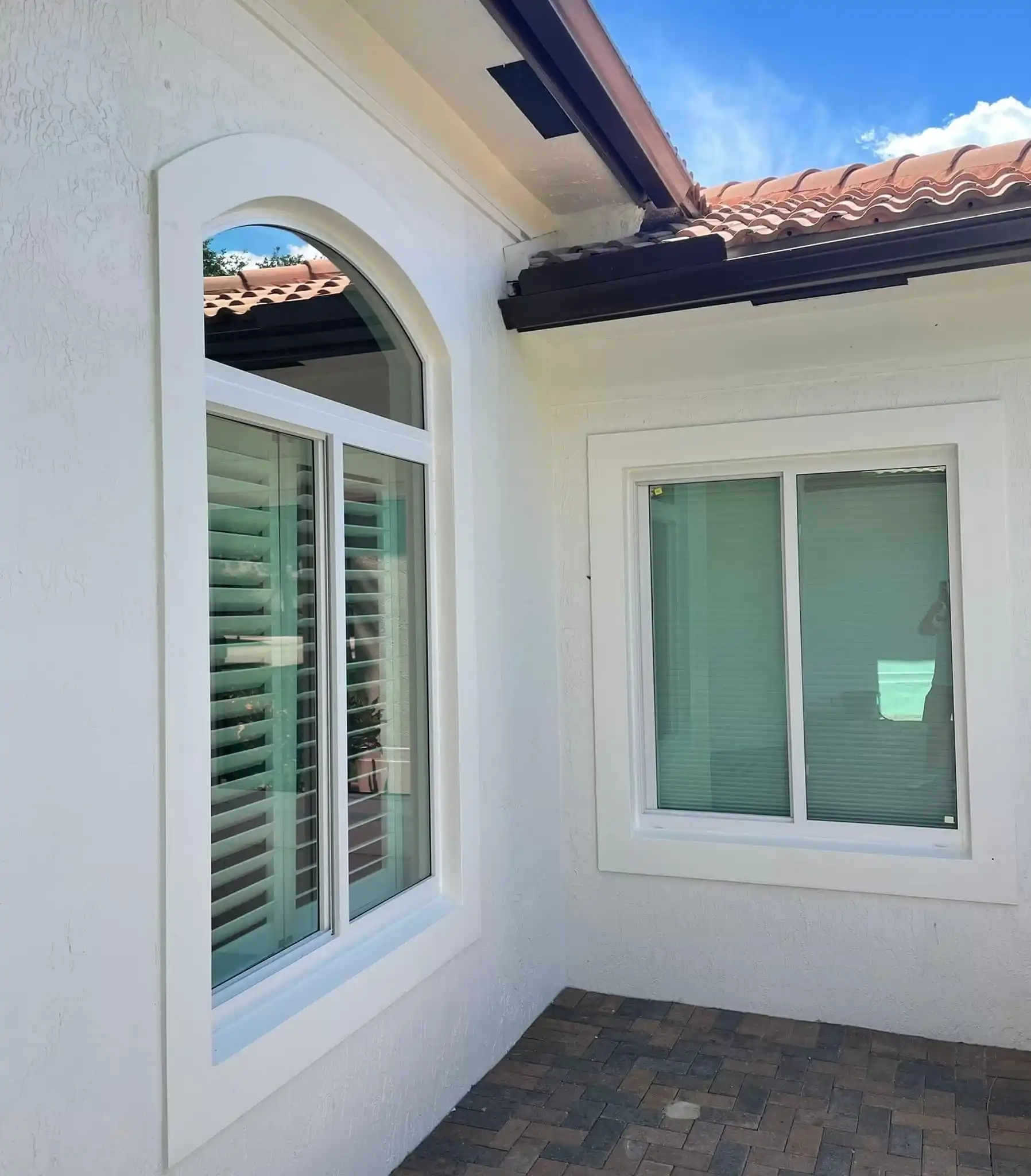
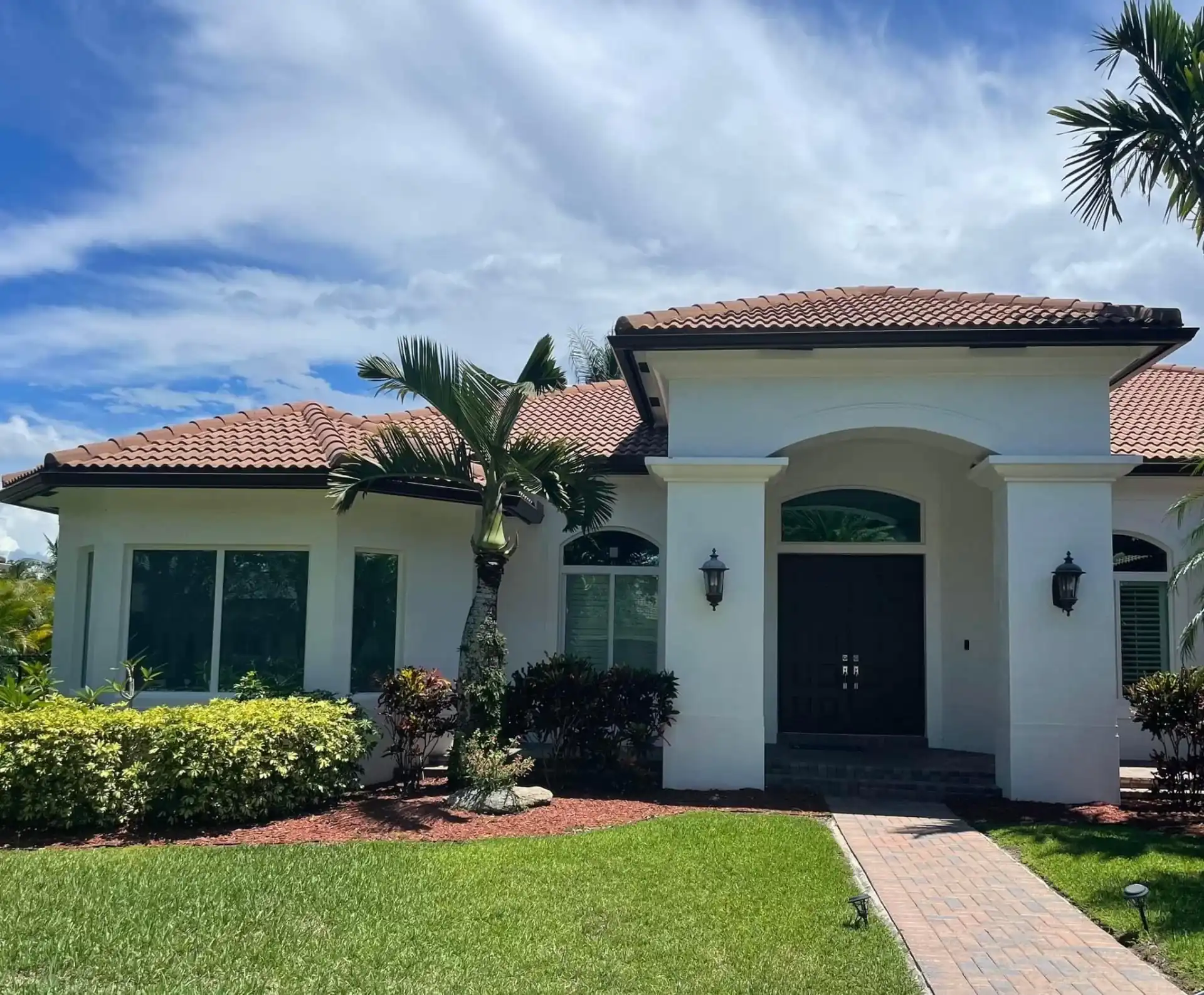
Broward County home with clay barrel tile roof and impact windows
Service · Roofing

South Florida Roofing: The Complete Homeowner Guide

Florida-licensed residential and commercial roofing — shingle, tile, metal, and flat-roof systems installed across South Florida under FL DBPR CCC1335157. Florida Product Approval verified, full permit pathway handled in-house, and an installation crew that works under our license — never subcontracted.

Last updated May 2026Reviewed by Aldo Dellamano, FL CGC1525289
Call (954) 408-4000or fill out the form for a free estimate
  • 93+
    Roof projects completed
    Residential + commercial replacements
  • 1,500+
    Permits pulled
    Across all SafeGuard verticals
  • 30+
    Years in South Florida
    Combined leadership experience
  • 4
    Florida licenses held
    GC · Roofing · Plumbing · Mechanical

Reviews

What South Florida Homeowners Say

Loading Google reviews…

Built for South Florida

Why HVHZ-grade roof installation matters

Broward County home with clay tile roof and impact entry doors

Florida Product Approval-verified per material

Every component on the roof — underlayment, shingle/tile/panel, ridge cap, drip edge, fastener — has to match the FPA number on the engineering submittal. We verify FPA at order time and again at install time so the inspector finds the artifact they're looking for.

Roofer installing flat roof membrane on South Florida commercial building

Roofing license CCC1335157 — separate from GC

Florida requires a Certified Roofing Contractor license to pull a roof permit (a General Contractor license alone isn't enough). SafeGuard holds both — every roof we pull is filed under CCC1335157 and stays the responsible party through dry-in, final, and close-out.

South Florida home with tile roof, impact windows, and double entry doors

Tear-off surprises handled on site

Most roofs reveal issues at tear-off — rotted decking, fastener pull-through, prior unpermitted patch jobs. Our W-2 crews include the licensed crew lead with authority to scope + price the corrections same-day, not 'we'll send the inspector back tomorrow'.

At a Glance

South Florida roofing — key facts

Service area
Miami-Dade · Broward · Palm Beach · Martin · St. Lucie counties
Roof systems
Shingle · Tile (clay/concrete) · Metal · Flat (TPO, modified bitumen)
Wind rating
Up to 175 mph design wind (HVHZ coastal)
Code reference
Florida Building Code 7th Edition · HVHZ chapter
Product approval
Florida Product Approval (FPA) verified per material
Roofing license
FL DBPR CCC1335157 (Aldo Dellamano)
Crew model
In-house W-2 — no subcontracted permit pulling
Permit pathway
Sealed plans, FPA verification, NoC, dry-in + final inspections

South Florida roofing is unlike roofing anywhere else in the United States. Every county in our service area — Miami-Dade, Broward, Palm Beach, and Martin — sits inside or immediately adjacent to the High-Velocity Hurricane Zone (HVHZ), the most demanding wind-load jurisdiction on the continent. Your roof must survive sustained winds of 175+ mph, pass Miami-Dade Notice of Acceptance (NOA) testing, and meet a six-nail fastening pattern just to receive a certificate of occupancy. Get those details wrong and your insurer can deny a storm claim outright. This guide covers every material type, every county's permit process, the Florida 25% repair rule, wind-mitigation credits, and how to document damage after a storm — so you can walk into any contractor conversation fully informed.

Why South Florida Roofing Is Uniquely Complex

South Florida roofing systems installed after 2002 must comply with the Florida Building Code (FBC) Chapter 15 and, in HVHZ jurisdictions, Florida Building Code Section 1520, which mandates minimum 6-inch nail spacing on roof decking and a continuous load-path from ridge to foundation. The Florida Building Code is updated every three years, and each revision adds requirements — the 2023 edition tightened deck-attachment tables for re-roofs triggered by the 25% repair rule. Every roofing system must carry a Miami-Dade NOA (Notice of Acceptance) issued after passing TAS 110 and TAS 117 uplift tests, which simulate wind pressures at 150 mph and above. You can verify any product's approval status in the Miami-Dade Notice of Acceptance database before signing a contract. Beyond wind, South Florida averages 60 inches of rainfall per year, with UV index readings that routinely exceed 11 — the highest category — from April through October. That combination accelerates shingle granule loss, causes clay tile mortar to erode, and degrades membrane adhesion on flat systems. Choosing the right material is not just a budget decision; it is a 20-to-30-year performance commitment. A licensed contractor holding a Florida roofing license (CCC-prefix) is the only professional legally authorized to pull roofing permits in Miami-Dade, Broward, Palm Beach, and Martin counties.

Licensed Roofing Contractor

Roofing Systems We Install Across South Florida

  • Asphalt Architectural Shingles

    Asphalt roof installation covers dimensional shingle systems rated for HVHZ — including GAF Timberline HDZ and Owens Corning Duration — which are the most common choice for single-family homes under 6,000 sq ft.

  • Metal Roofing Systems

    Metal roof installation uses standing-seam and structural corrugated panels with documented 50+ year lifespans, ideal for homes wanting maximum wind resistance and the lowest long-term cost per year.

  • TPO Membrane Systems

    TPO roof installation is the go-to white-membrane solution for low-slope and commercial roofs; reflective TPO can cut cooling loads by up to 15% on ENERGY STAR-qualifying assemblies.

  • Flat Roof Assemblies

    Flat roof installation covers modified bitumen, single-ply, and built-up (BUR) assemblies for townhouses, additions, and commercial structures — each engineered to handle ponding water and South Florida's intense UV exposure.

  • Shingle Brand Selections

    Shingle roof installation lets you choose among GAF, Owens Corning, and CertainTeed product lines, unlocking manufacturer warranty stacking — up to a 50-year system warranty when paired with certified accessories.

  • Residential Full Replacements

    Residential roof installation handles the complete tear-off-and-replace scope for single-family homes, including decking inspection, new peel-and-stick underlayment, and all county permit filings.

  • Commercial Roof Replacement

    Commercial roof installation addresses low-slope membrane work for warehouses, strip centers, and multi-tenant buildings, with phased scheduling to keep your tenants operational throughout the project.

Concrete Tile Re-Roof in Progress — Broward County

Roofing Materials: Tile, Shingle, Metal & Flat Systems

Concrete tile and clay tile account for roughly 50% of all re-roofs we complete across Miami-Dade and Broward, and for good reason: both materials carry Class A fire ratings and, when properly fastened with 3-inch ring-shank nails at 6-inch spacing, can outlast the structure itself. Concrete tile weighs about 9–12 lbs per square foot, so older homes built before 1994 often require a structural engineer to confirm the rafter system can handle the load before tile is approved in a permit. Clay tile weighs slightly less — around 7–10 lbs — and carries a premium price, but its fired-earth composition resists UV degradation better than concrete over multi-decade timelines. Asphalt architectural shingles are the fastest-installed and most cost-effective option for homeowners with a tighter budget or a lower roof pitch. The Shingle Roof Installation page details how GAF's Timberline HDZ earns Miami-Dade NOA No. 21-0503.04, qualifying it for HVHZ installations. Metal roofing — particularly concealed-fastener standing-seam — is the material that wind-mitigation inspectors love most: it earns the highest credits on an OIR-B1-1802 form (the Florida wind-mitigation inspection report), and ENERGY STAR certifies many Kynar-coated panels for cool-roof rebates. For low-slope and flat applications, TPO and modified bitumen are the dominant choices. Each material has a distinct warranty structure, maintenance interval, and insurance implication — factors we walk through in every free estimate.

HVHZ Code, NOA Approvals & the 25% Rule

Three code concepts control nearly every roofing decision in South Florida. First, HVHZ (High-Velocity Hurricane Zone) designation covers all of Miami-Dade and Broward counties under FBC Section 1520, requiring every roofing assembly — underlayment, tiles, fasteners, flashing — to hold a Miami-Dade NOA or Florida Product Approval number. Broward permits are filed with individual municipal building departments, while Miami-Dade uses the county-level portal; both require the NOA number on the permit application. Second, the Florida 25% repair rule (FBC Section 706.1.1) states that if repairs or re-covering exceed 25% of a roof's total area within any 12-month period, the entire roof must be brought up to current code — including new peel-and-stick underlayment (Self-Adhering Modified Bitumen, or SAM), upgraded deck attachment, and a new permit. This rule catches many homeowners off guard when an insurance adjuster scopes what appears to be a partial repair. Third, decking inspection is mandatory on every full tear-off: inspectors require the decking to be exposed before new sheathing or underlayment is applied, and any sheathing panels with more than 3 soft spots per 4×8 sheet must be replaced. SafeGuard documents every deck board before cover-up with time-stamped photos shared directly with the homeowner. The National Hurricane Center publishes historical storm tracks that underscores why every one of these requirements exists — South Florida has faced 9 named storms making landfall or passing within 60 miles since 2004.

The 25% Rule Can Trigger a Full Re-Roof

How a South Florida Roofing Project Works

  1. 1

    Free Inspection & Estimate

    A licensed inspector from SafeGuard examines your roof, attic decking, and flashings — then produces a written scope with line-item pricing. Request a free roof inspection after a storm or before listing your home. This typically takes 45–90 minutes on-site.

  2. 2

    Permit Application & NOA Filing

    We submit the permit package — including the NOA number, product approval documentation, and engineering drawings where required — to your county or municipal building department. Broward permit timelines average 5–10 business days; Miami-Dade runs 7–14 days; Palm Beach and Martin counties vary by municipality, often 5–12 days.

  3. 3

    Tear-Off, Deck Inspection & Underlayment

    The old roof system is removed, every deck board is inspected and photographed, and failing sheathing is replaced. Peel-and-stick SAM underlayment is applied before any tiles, shingles, or panels go on — this layer alone reduces leak probability by over 90% in a hurricane event.

  4. 4

    System Installation & Fastening

    The approved roofing system is installed to the NOA-specified fastening pattern — 6 nails per shingle or tile in HVHZ zones. Our crews use pneumatic collated nailers calibrated to the manufacturer's torque specs to prevent over-driving, which can void both the NOA and the manufacturer warranty.

  5. 5

    Final Inspection & Warranty Documentation

    The county inspector performs a final in-person inspection and issues a certificate of completion. We then register the manufacturer warranty in your name — critical for warranty stacking — and provide a wind-mitigation report you can submit to your insurer for a premium credit.

Peel-and-Stick Underlayment Installation — Palm Beach County

Insurance, Wind-Mitigation Credits & Storm Claims

Citizens Property Insurance — Florida's insurer of last resort, which covers about 1.2 million policies — now non-renews policies on homes with roofs older than 15 years (shingles) or 25 years (tile and metal) unless the owner provides a recent inspection report confirming remaining life. That policy change has made roof age a direct financial trigger for hundreds of thousands of South Florida homeowners. A new roof, paired with a wind-mitigation inspection (OIR-B1-1802 form), can generate annual premium credits of $1,500–$4,000 depending on roof shape, opening protection, and fastening method. Hip roofs earn the highest credits; gable roofs with large exposed rake edges earn the least. After a named storm, the documentation sequence matters enormously. Before any repairs begin, photograph every impacted area from multiple angles, create a written inventory of damaged items, and request a copy of the adjuster's scope. If the adjuster's scope covers less than 25% of the roof, review it carefully — you may be entitled to a full replacement under the 25% rule. FEMA Flood Map Service Center maps can also be relevant if your home sits in an AE or VE flood zone, where a full re-roof sometimes triggers elevation certificate updates. Our team accompanies homeowners during adjuster meetings to provide a parallel scope and photos. Read verified customer reviews from homeowners who have walked this process with us.

SafeGuard Roofing by the Numbers

  • 4
    Counties Served
    Miami-Dade, Broward, Palm Beach, Martin
  • CCC1335157
    FL Roofing License
    Verifiable at DBPR — no unlicensed subs
  • 175+ mph
    HVHZ Wind Design
    Every system we install is NOA-approved
  • CGC1525289
    General Contractor License
    Covers structural decking & code upgrades

County Permitting, Commercial vs Residential Scope

Permit requirements differ by county and even by municipality within a county. Broward County has 31 municipalities, each with its own building department — Fort Lauderdale, Pembroke Pines, and Miramar each use separate portals and inspection schedules. Our Broward County roofing hub page details the specific permit checklist, typical inspection sequence (framing inspection, dry-in inspection, final), and average turnaround times for the most active municipalities. In Palm Beach County, residential re-roofs under $15,000 can sometimes qualify for an online express permit, shortening timelines to 3–5 business days; larger scopes or tile systems require plan review. See our Palm Beach County roofing page for permit fee tables and code-upgrade requirements specific to that jurisdiction. Commercial roofing differs from residential in three key ways: scope of materials (flat TPO and modified bitumen dominate over tile), project phasing (sections can be done in phases to keep tenants operational), and inspection complexity (commercial jobs require a special inspector on projects over 5,000 sq ft in Miami-Dade). Our commercial roof installation service covers warehouses, strip centers, HOA common-area buildings, and mixed-use structures. We extend our service across all of South Florida — visit the service areas directory for a full city-by-city list of every community we roof in across all 4 counties. For homeowners who need help spreading the cost, we offer financing through underwritten installment plans designed specifically for full re-roofs.

Impact Glass vs Hurricane Shutters vs New Roof: Where to Start?

Tile / Metal RoofAsphalt Shingle Roof
Typical Lifespan40–100 years (material dependent)20–30 years (HVHZ-rated shingles)
HVHZ NOA RequiredYes — tile or panel system NOAYes — shingle product approval required
Wind-Mit Credit PotentialHigh (metal highest; hip tile strong)Moderate — depends on attachment method
Citizens Insurance Threshold25-year non-renewal trigger (tile/metal)15-year non-renewal trigger (shingles)
Average Install CostHigher upfront; lower cost-per-yearLower upfront; more frequent replacement
Structural LoadEngineer review may be needed (tile only)No structural review typically needed
Manufacturer Warranty StackLifetime limited (tile); 40-yr (metal)Up to 50-yr system warranty (GAF, OC)

Manufacturer Warranty Stacking Requires Certification

Metal Standing-Seam Roof — Martin County

Get a Free South Florida Roofing Inspection

From our project library

Recent roof installations from across South Florida

Every photo here is a real SafeGuard project from the JobNimbus library — shingle, tile, metal, and flat-roof installs across Miami-Dade, Broward, Palm Beach, Martin, and St. Lucie counties.

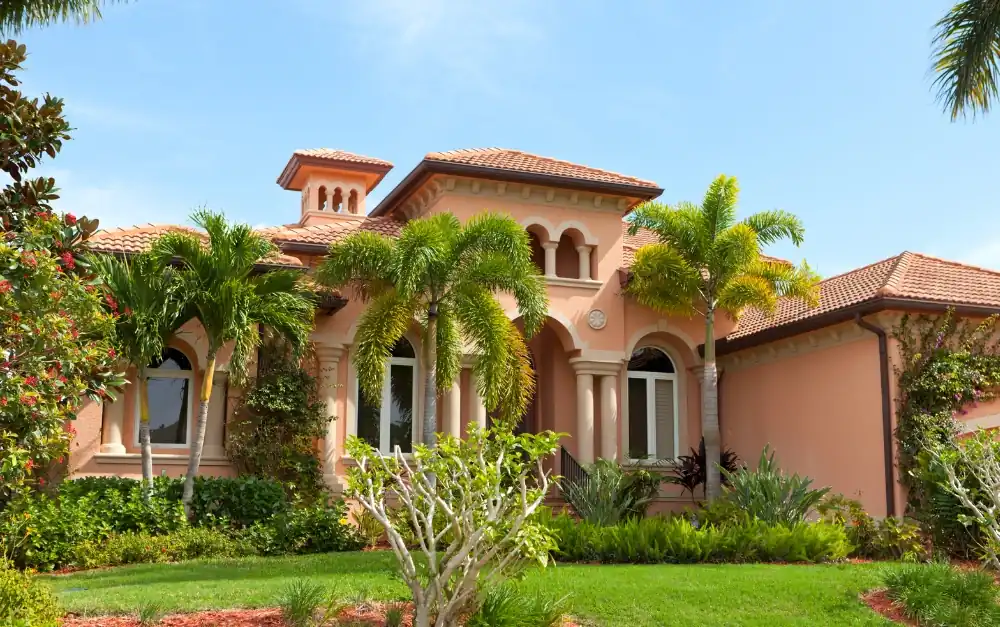
  • Mediterranean South Florida home with terracotta clay tile roof and arched windows
  • Roofer torch-applying modified bitumen membrane on flat commercial roof
  • Modern Florida home with standing seam metal roof and impact windows
  • South Florida home with clay barrel tile roof and arched windows
  • Roofer installing dark teal metal tile roof on South Florida home
  • Broward County home with clay barrel tile roof and impact windows
  • Mediterranean South Florida home with terracotta clay tile roof and arched windows
  • Two roofers installing shingles on residential home under construction

Frequently asked

South Florida roofing — common questions

What wind speed must a South Florida roof withstand?

South Florida roofs must withstand design wind speeds of 175 mph or higher in Miami-Dade and Broward counties under Florida Building Code Section 1520 HVHZ provisions. Every roofing product installed there—tile, shingle, metal panel, or membrane—requires a Miami-Dade Notice of Acceptance proving it passed TAS 110 and TAS 117 uplift testing at these pressures.

Palm Beach and Martin counties enforce similar high-wind standards under the FBC, with specific design pressures varying by building location and exposure category per the code's risk assessment requirements.

When does a partial roof repair trigger a full replacement?

Florida Building Code Section 706.1.1 requires a full code-compliant replacement when cumulative repairs or re-covering within any 12-month period exceed 25% of the total roof area. This triggers new underlayment, upgraded deck attachment to current nailing tables, and a new building permit requirement that many homeowners discover mid-claim.

Exceeding the 25% threshold means the entire roof must meet current code standards, not just the repaired sections. Your insurer may initially scope only a patch; knowing this rule helps you negotiate the full replacement scope upfront.

How long does a roofing permit take in Broward vs Miami-Dade?

Broward County roofing permits typically take 5–10 business days, while Miami-Dade County averages 7–14 business days due to mandatory NOA documentation review at the county level. Pembroke Pines and Miramar often process faster through online portals. Palm Beach County offers a 3–5 day express permit for qualifying residential jobs under $15,000.

Timeline varies by inspector availability and submittal completeness. Martin County generally ranges 5–12 business days depending on municipality. Earlier processing often correlates with online filing and thorough initial documentation.

What is a wind-mitigation inspection and how much can I save?

A wind-mitigation inspection uses the OIR-B1-1802 form to document your roof's shape, covering material, deck attachment method, and opening protection. Insurers use those details to calculate premium discounts. In South Florida, a new hip roof with a six-nail fastening pattern and HVHZ-rated shingles or tile can generate annual premium savings of $1,500–$4,000 depending on insurer and policy type. The inspection itself typically costs $75–$150 and is good for 5 years — one of the highest-ROI documents a homeowner can obtain after a re-roof.

What roof age triggers Citizens Insurance non-renewal?

Citizens Property Insurance non-renews policies on homes with asphalt shingle roofs older than 15 years and tile or metal roofs older than 25 years, unless the owner provides an inspection report confirming adequate remaining roof life. This policy applies to the roughly 1.2 million Citizens policyholders across Florida. If your roof is approaching those thresholds, a licensed roofing inspection can document remaining life and potentially delay non-renewal — or confirm it's time to budget for replacement before the policy lapses.

Do I need an NOA for every component, or just the tiles?

Every roofing assembly component must carry its own NOA or appear on the tile system's NOA as an approved accessory. This includes underlayment, fasteners, adhesives, ridge vents, and flashing. A tile's NOA does not automatically approve any underlayment—the underlayment must independently hold Florida Product Approval or be named within the tile system's NOA documentation.

Your permit application must list every component's approval number for inspector verification during the dry-in inspection.

What is warranty stacking and which brands offer it?

Warranty stacking layers a manufacturer's system warranty covering shingles, underlayment, starter, and ridge cap on top of the standard material warranty, extending coverage and reducing out-of-pocket costs on future claims. GAF's Golden Pledge, Owens Corning's Platinum Protection, and CertainTeed's SureStart Plus are the primary enhanced programs in South Florida. All three require factory certification and same-brand accessories.

System warranties reach 50 years on shingles and cover labor and materials, significantly exceeding basic 30-year shingle warranties alone.

How does commercial roofing differ from residential?

Commercial roofing in South Florida primarily differs in materials, scale, and regulatory oversight. Commercial structures use flat roofing systems like TPO, modified bitumen, and built-up assemblies suited for low-slope roofs, while residential homes use pitched shingles. Miami-Dade requires special inspectors on commercial projects exceeding 5,000 sq ft, and permit fees are calculated per square foot rather than flat rates.

Phased construction keeps tenants operational during large commercial jobs. Commercial work demands more detailed specification compliance and third-party oversight than residential projects.

Ready for a new South Florida roof?

Free in-home estimate that includes the full permit pathway in writing — sealed plans, FPA verification per material, Notice of Commencement, and dry-in plus final inspections.

Content Disclosure

This article is provided for general information only and reflects current Florida Building Code requirements, common South Florida construction practices, and SafeGuard's field experience. Actual project costs, permit requirements, material availability, and timelines vary based on your home, municipality, and project scope. Florida law requires that any residential construction work over $1,000 be performed by a licensed contractor — always consult a Florida-licensed contractor before starting an impact-window, impact-door, or roofing project and verify credentials at myfloridalicense.com. This guidance is not a substitute for a project-specific estimate or on-site evaluation by a licensed professional.