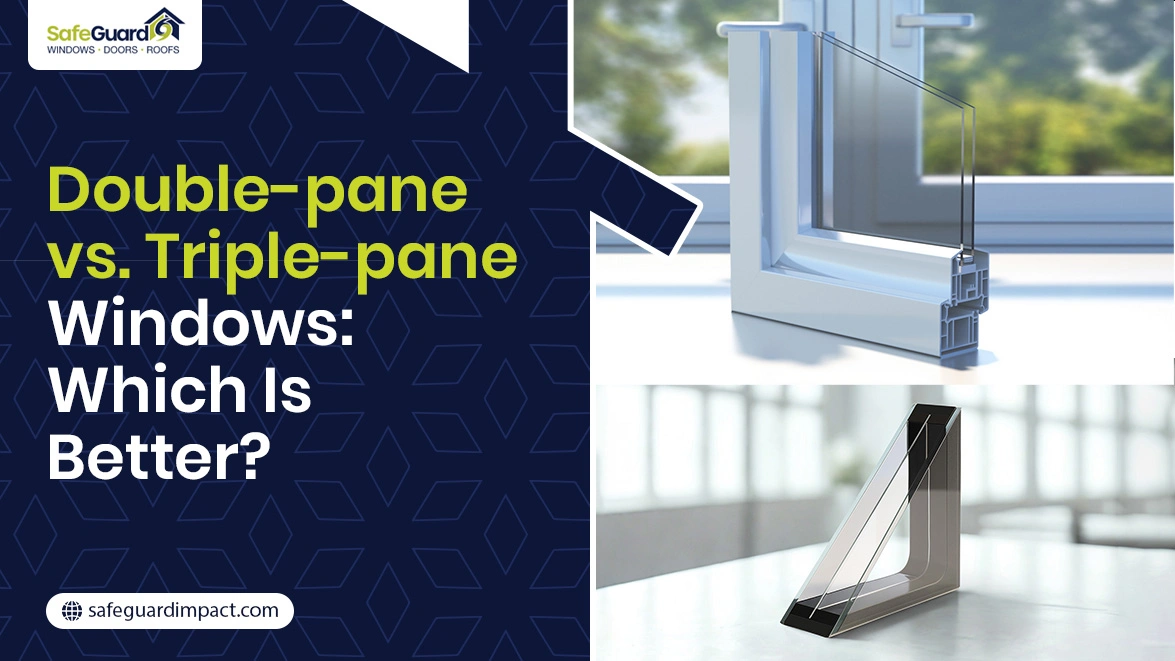



For most Florida homeowners, double-pane impact windows are the right choice. They meet building code, handle the heat, and deliver strong energy savings without the weight or cost penalty of triple-pane glass. Triple-pane is the better option for extreme climates, passive house builds, or homes near major noise sources like highways or airports. The difference comes down to your climate, your budget, and how long you plan to stay in the home.
Key Takeaways
- Double-pane: Two glass sheets, one gas-filled chamber. The industry standard for Florida homes and the minimum required by most building codes.
- Triple-pane: Three glass sheets, two gas chambers. Up to 30% more efficient than double-pane but 15–40% more expensive and significantly heavier.
- Weight: Triple-pane can weigh 50% more than double-pane. Older frames may not support it without reinforcement.
- Noise reduction: Triple-pane wins if you live near a highway, airport, or train line. Double-pane is sufficient for most residential streets.
- Payback period: Double-pane pays back in 5–10 years. Triple-pane takes 15–25 years to recoup the upfront cost.
- Florida climate: In South Florida, the priority is solar heat gain (SHGC), not cold insulation. Double-pane with a low SHGC coating performs as well as triple-pane for most local conditions.
- Tax credits: Energy-efficient window upgrades may qualify for federal tax credits. Check current 2026 eligibility before purchasing.
What Are Double-Pane Windows?
Double-pane windows have two layers of glass. It is separated by a sealed, insulating airspace and it is usually filled with argon gas in order to reduce heat transfer. Most building codes now require these as the bare minimum.
Double-panes are great because they work for almost everyone. They provide a solid barrier without being too heavy. They fit into basically any frame style, whether you like vinyl or wood. For a typical suburban house, double-pane windows are usually the logical choice. It hits the “sweet spot” between cost and performance. In South Florida specifically, double-pane windows with a low SHGC coating are the go-to the climate demands solar heat blocking far more than cold insulation, which is where triple-pane earns its keep in northern states.
What Are Triple-Pane Windows?
The triple-pane windows contain three sheets of glass and two separate gas chambers. It is a much tougher barrier against the outside world.
These windows are masters at keeping heat inside. In the winter, the inside glass stays much warmer than a double-pane version. But they are beasts to install. They can weigh 50% more than a double-pane. You need a really strong frame to hold that weight so the window doesn’t sag or warp over the years.
Comparing the Double-Pane and Triple-Pane Windows
Here is the raw breakdown of how they stack up:
| Feature | Double-pane Windows | Triple-pane Windows |
| Efficiency | High (Industry Standard) | Elite (Up to 30% better) |
| Noise | Good for quiet streets | Best for highways/airports |
| Weight | Manageable | Very Heavy |
| Price | Budget-friendly | 15% to 40% more expensive |
| Return | 5 to 10 years | 15 to 25 years |
Which One Should You Choose?
There is no “correct” answer. It depends on your home.
Double-pane is better if:
- You live in a mild climate where temperatures don’t drop below zero for months.
- You are on a budget and want the best “bang for your buck.”
- Your window frames are older and can’t handle a ton of weight.
- You want to see your money back quickly through lower bills.
Triple-pane is better if:
- You live in an extremely cold or very hot climate.
- You live near an airport or a very loud road.
- You are building an ultra-green “passive house.”
- You plan to stay in the home for 20+ years.
Answering The Most Common Questions
Do triple-pane windows reduce condensation?
Yes. Triple-pane windows keep the interior glass warmer during cold weather. This reduces the chance of condensation forming on the inside surface compared to double-pane windows.
Are triple-pane windows worth it for noise reduction?
If you live near a highway, train line, or airport, triple-pane windows can make a noticeable difference. The extra pane and gas chamber help block more sound waves than double-pane glass.
Do triple-pane windows increase home value?
They can. Energy-efficient upgrades often make homes more attractive to buyers. However, the value increase usually depends on the local market and how energy efficiency is prioritized by buyers in your area.
Is double-pane enough for Florida’s climate?
For most South Florida homes, yes. The bigger factor in Florida isn’t the number of panes it’s the SHGC (Solar Heat Gain Coefficient) rating. A double-pane window with a low SHGC coating will keep your home cooler and reduce AC costs more effectively than a triple-pane window without it.
How much more do triple-pane windows cost?
Typically 15–40% more than double-pane, depending on the size, frame material, and brand. For a full home installation, that difference can add up to several thousand dollars. The payback period through energy savings is generally 15–25 years.
Conclusion
So, between double-pane and triple-pane windows, which one wins? For most homeowners, double-pane impact windows deliver everything you need code compliance, energy efficiency, and storm protection at a price that makes financial sense. Triple-pane is worth the investment if you’re building for the long term or dealing with extreme noise or temperature conditions.
At SafeGuard Impact, we’ll run the numbers for your specific home and help you choose the right glass for your climate, your budget, and your county requirements. Contact us today.