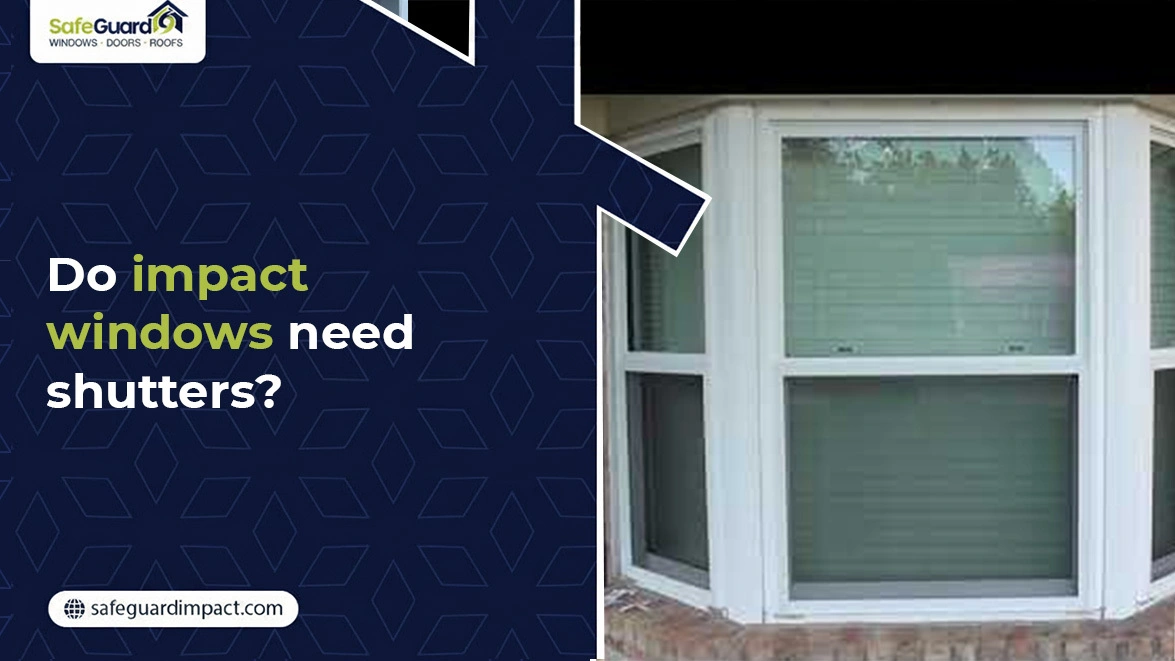



Wondering whether impact windows need shutters? Short answer: not always… but sometimes? Yes. While impact windows offer strong protection on their own, shutters can still play a strategic role depending on your location, risk exposure and insurance requirements.
Key Takeaways
|
Do Impact-Resistant Windows Require Shutters?
Impact-resistant windows are engineered using laminated glass as well as reinforced frames. This makes them highly resistant to shattering. Even if the glass cracks, it typically stays intact. As a result, it prevents wind & debris from entering your home. This is critical during hurricanes where internal pressure buildup can lead to structural failure.
Because of this built-in resilience most modern building codes especially in hurricane-prone regions do not mandate shutters if certified impact windows are installed.
For many homeowners impact windows alone meet safety requirements and provide sufficient protection during standard storm conditions.
That said, “not required” doesn’t mean “unnecessary.”
Shutters act as a secondary defense system. In extreme weather scenarios such as Category 4 or 5 storms, prolonged exposure, or repeated impacts, having both impact windows and shutters significantly reduces risk. Think of shutters as redundancy in a high-stakes system. Not essential for baseline compliance… but valuable for worst-case scenarios.
Factors Affecting Shutter Requirements for Impact Windows
Here are the factors that affect shutter needs for impact windows.
1. Geographic Location
Your proximity to coastal areas or high-risk hurricane zones is a major factor. Homes directly along the shoreline face stronger winds, higher debris velocity, and storm surge risks. In these areas even with impact windows installed shutters are often recommended for maximum protection.
2. Local Building Codes
Building regulations vary by region. Some jurisdictions accept impact windows as a standalone solution… while others may require additional protective measures for certain property types or elevations. Always verify compliance with local authorities before deciding to skip shutters.
3. Insurance Policy Requirements
Insurance providers often influence this decision more than building codes. Some insurers offer lower premiums if both impact windows and shutters are installed while others may require shutters in high-risk zones to qualify for full coverage. In some cases lacking shutters could limit claims or increase deductibles.
4. Storm Severity and Frequency
If your area experiences frequent or high-intensity hurricanes, relying solely on impact windows may not be the most risk-averse strategy. Repeated exposure to flying debris can weaken materials over time. Shutters help absorb initial impact. This reduces wear on the windows themselves.
5. Home Design & Vulnerabilities
Large window openings, sliding glass doors, and uniquely shaped architectural features may be more exposed to wind pressure and debris. Homes with expansive glass surfaces are particularly vulnerable. This makes shutters a practical addition even when impact glass is installed.
6. Budget & Cost Considerations
Impact windows are already a premium investment. Adding shutters increases upfront costs… but it can also extend the lifespan of your windows and reduce long-term maintenance expenses. Additionally potential insurance discounts may offset some of the installation costs over time.
7. Additional Benefits Beyond Storm Protection
Shutters arent just about hurricanes. They offer everyday advantages such as improved insulation, reduced UV exposure, enhanced privacy as well as increased security. For many homeowners these added benefits justify the investment… even if shutters aren’t strictly required.
Conclusion
So, do impact windows need shutters? In most cases, no. They’re designed to stand on their own. But in high risk environments or for homeowners seeking maximum protection, shutters are a smart add-on.
They provide an extra safety margin, potential insurance benefits, and added functionality beyond storm defense. Ultimately the decision comes down to your risk tolerance, location and long-term priorities.
Feel free to contact SafeGuard Impact for expert impact windows installation advice.
FAQ Section
Do impact windows replace hurricane shutters completely?
Impact windows can replace shutters in many cases. Especially where building codes allow. However, shutters still provide additional protection. And so they may be recommended in high-risk zones.
Are shutters worth it if I already have impact windows?
Sure, if you want maximum protection. They’re not always necessary… but they can be valuable.
Can insurance require shutters even with impact windows installed?
Yes. Some insurance providers may still require shutters or offer better coverage terms if both systems are in place. Particularly in hurricane-prone areas.