
Impact Windows
Impact Picture Windows: Sizes, Ratings, and Where They Work
Impact picture windows deliver unobstructed views and hurricane protection, but code rules govern where they can go. Learn sizes, ratings, and.
What an Impact Picture Window Actually Is
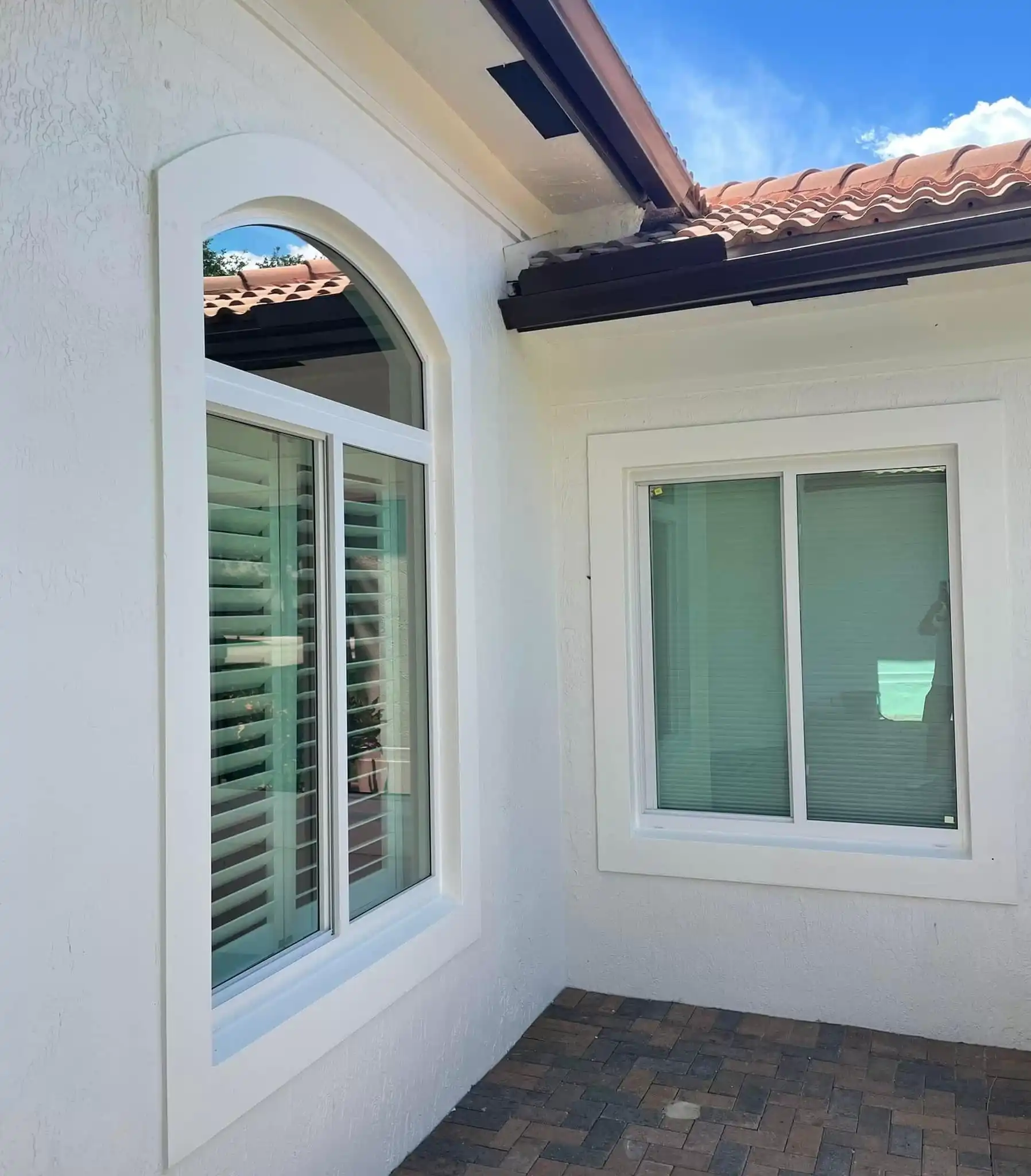
An impact picture window is a single pane of laminated glass fixed permanently inside a frame. It has no sashes (movable glass panels), no cranks, and no operable hardware of any kind.
An impact picture window is a single pane of laminated glass fixed permanently inside a frame. It has no sashes (movable glass panels), no cranks, and no operable hardware of any kind. The 2023 Florida Building Code requires impact-rated fenestration in High Velocity Hurricane Zone (HVHZ) counties. Miami-Dade and Broward are both HVHZ counties. Every product must carry a valid Florida Product Approval (FPA) number or Miami-Dade Notice of Acceptance (NOA). That approval must be tied to the current code cycle. The frame is completely sealed at the factory. This gives a picture window a natural energy efficiency advantage over operable styles. That same sealed frame is also why it cannot be used as a bedroom egress (emergency escape) opening. You can read more about the full range of fixed and operable styles on our types of impact windows page.
- ~24 in
- Typical minimum width
- 96+ in
- Large picture window reach
- 42 sq ft
- PGT WinGuard PW/AR7720 max area
- 25
- Standard shapes available
Sizes, Shapes, and Frame Options
Picture windows typically start at about 24 inches wide; large picture windows can extend to or beyond 96 inches, according to PGT's product FAQ.
Picture windows typically start at about 24 inches wide; large picture windows can extend to or beyond 96 inches, according to PGT's product FAQ. The PGT WinGuard Aluminum PW/AR7720 data sheet puts the minimum unit at 14-1/2 × 14-1/2 inches and the maximum area at 42 square feet, roughly a 6 × 7-foot pane. That same sheet lists 25 standard shapes, so the window doesn't have to be a simple rectangle. Arched tops, trapezoids, and custom geometric cuts are all available within that 42-square-foot envelope. Frame options on the PW/AR7720 include flange, nail fin, and box or equal-leg profiles, with a 2-3/4-inch frame depth. If you're comparing frame materials, our vinyl vs. aluminum windows guide covers the trade-offs in detail. The right frame depth matters especially in stucco walls, where the rough opening depth can limit which frame profile fits flush.
Reading an Impact Picture Window Approval
Every approval document for an impact picture window lists 3 critical numbers: design pressure (DP), missile level, and HVHZ scope.
Every approval document for an impact picture window lists 3 critical numbers: design pressure (DP), missile level, and HVHZ scope. Design pressure is measured in pounds per square foot (psf). It is the rated wind load the unit can withstand. The Florida Product Approval FL47215 (evaluated 12/19/2024) covers the ECO-NOVO Series 375 fixed window. It shows a maximum load of +70/−70 psf. It is rated for both large and small missile impact. It is also compliant with the 2023 FBC inside and outside the HVHZ per TAS 201/202/203. TAS 201/202/203 are the HVHZ-specific test protocols. Not every picture window carries that HVHZ scope. A 2015 CWS PW-6150 PVC impact picture window drawing lists large missile impact at +/−50 psf. It allows maximum unit sizes up to 96 × 54 inches. However, it explicitly states the product 'may not be used in the High Velocity Hurricane Zone (HVHZ) or in ASTM E 1996 Wind Zone 4 areas.' That single line means the CWS PW-6150 (as drawn in 2015) cannot be installed in Miami-Dade or Broward without a separate HVHZ-compliant approval. Our HVHZ explained page covers what that designation means for your permit.
HVHZ Approval Is Not Universal
Not all impact picture windows are HVHZ-approved. Always verify that the Florida Product Approval number covers the High Velocity Hurricane Zone before purchasing…
Not all impact picture windows are HVHZ-approved. Always verify that the Florida Product Approval number covers the High Velocity Hurricane Zone before purchasing or ordering a unit for Miami-Dade or Broward County.
ECO-NOVO Series 375 vs. CWS PW-6150 (2015 Drawing)
| ECO-NOVO Series 375 (FL47215) | CWS PW-6150 (2015 Drawing) | |
|---|---|---|
| Design Pressure | +70 / −70 psf | +50 / −50 psf |
| Missile Level | Large and small missile | Large missile (Missile Level D, Wind Zone 3) |
| HVHZ Scope | Approved inside and outside HVHZ | Explicitly excluded from HVHZ |
| Code Cycle | 2023 FBC (evaluated 12/19/2024) | 2015 drawing, verify current approval status |
| Frame Material | Not specified above, verify with manufacturer | PVC (vinyl) |
Glass Packages and Energy Performance
Because a picture window's frame never opens, air infiltration drops to near zero, a sealed unit outperforms operable styles on energy metrics by default.
Because a picture window's frame never opens, air infiltration drops to near zero, a sealed unit outperforms operable styles on energy metrics by default. The PGT WinGuard PW/AR7720 sheet lists 3 glass packages, all based on 1-inch laminated insulating glass (3/16-inch outer lite, 7/16-inch air space, 7/16-inch PVB laminate inner lite). Energy Shield glass delivers a U-value of 0.44 and an SHGC (Solar Heat Gain Coefficient) of 0.36. Stepping up to SolarControl LowE2 drops the SHGC to 0.23 while holding the U-value at 0.44. Adding argon gas fill to that SolarControl LowE2 package lowers the U-value to 0.40. The sheet also notes that optional tempered glass 'adds additional strength.' For South Florida homes facing west or south, the lower SHGC of the LowE2 options can meaningfully reduce cooling load. To understand how impact window ratings like DP, U-value, and SHGC interact, see our full ratings explainer.
Where Impact Picture Windows Make the Most Sense
- Living room view walls — A fixed panel delivers an uninterrupted sightline with no horizontal rail breaking the glass. Pair it with flanking casements or single-hung units when the room needs airflow.
- Stairwells and high openings — Openings above 10 feet are difficult to reach for cranking or latching. A fixed picture window eliminates hardware maintenance and keeps the opening permanently sealed.
- Geometric and architectural accents — The PGT WinGuard PW/AR7720 offers 25 shapes, making it practical for arched, trapezoidal, or triangular openings that operable sashes cannot fill.
- Pairing with operable units — A large fixed center unit flanked by 2 operable casements or single-hungs gives a room maximum glass area while still meeting ventilation needs.
- Commercial and mixed-use facades — Fixed impact glazing handles large-format openings efficiently and is a common choice for the view-wall side of a living area or lobby in South Florida construction.
Where an Impact Picture Window Cannot Go: Bedroom Egress
Florida Residential Code R310.1 requires every sleeping room to have at least 1 operable emergency escape and rescue opening (EERO).
Florida Residential Code R310.1 requires every sleeping room to have at least 1 operable emergency escape and rescue opening (EERO). R310.2 sets the minimum dimensions: a net clear opening of at least 5.7 square feet (5 square feet at grade level), a net clear height of at least 24 inches, a net clear width of at least 20 inches, and a bottom of opening no more than 44 inches above the floor. A picture window, by definition, provides zero net clear opening, it cannot satisfy any of those requirements. If you're replacing a bedroom window that currently functions as the required egress, Florida Existing Building Code 702.5 offers a size exemption: the replacement is exempt from R310.2 dimensions if it is the manufacturer's largest standard size that fits the existing rough opening and matches or exceeds the operating style of the existing window. That rule applies to operable replacements only, swapping an egress window for a fixed picture window is a code violation regardless of how large the pane is. Miami-Dade's fast-track window and door disclosure document reinforces this: bedroom windows must continue to meet emergency escape rules under FEBC 702.5, and only approvals tied to the current code cycle are accepted.
Bedroom Egress Rule Is Absolute
No impact picture window, regardless of size or DP rating, can replace a bedroom's required emergency escape opening.
No impact picture window, regardless of size or DP rating, can replace a bedroom's required emergency escape opening. That opening must remain operable.
Safety Glazing for Large, Low-Mounted Panes
Florida Residential Code R308.4.3 creates a second placement rule that catches many homeowners off guard.
Florida Residential Code R308.4.3 creates a second placement rule that catches many homeowners off guard. A fixed or operable pane is classified as a hazardous location when all 4 of the following conditions are met: the pane is larger than 9 square feet, its bottom edge is less than 18 inches above the floor, its top edge is more than 36 inches above the floor, and a walking surface is within 36 inches horizontally of the glass. A floor-to-ceiling picture window in a living room or entry often meets every one of those criteria. R308.3.1 then requires glazing in hazardous locations to pass the CPSC 16 CFR 1201 impact test (ANSI Z97.1 is permitted for glazing not in doors or wet-area enclosures). Laminated impact glass used in an FPA-approved impact picture window typically satisfies the safety-glazing standard, but the installer must confirm the specific product approval covers that classification. This is one reason impact windows installation by a licensed contractor matters: a professional reviews both the hurricane approval and the safety-glazing compliance before pulling the permit.
How to Evaluate an Opening for a Picture Window
- Confirm the room type — Is the opening in a bedroom? If yes, verify that another window in the room already meets R310.2 egress requirements before proceeding with a fixed unit.
- Measure the rough opening — Record width, height, and wall depth. Compare against the product sheet's maximum area (e.g., 42 sq ft for the PGT PW/AR7720) and minimum size to ensure the unit fits.
- Check HVHZ applicability — If the home is in Miami-Dade or Broward County, confirm the product's Florida Product Approval explicitly covers the HVHZ. An approval that excludes the HVHZ is not permittable in those counties.
- Apply the safety-glazing test — Is the pane over 9 sq ft, bottom edge under 18 inches from the floor, top edge over 36 inches, with a walkway within 36 inches? If yes, confirm the approval covers the CPSC 16 CFR 1201 safety-glazing standard.
- Match to current code cycle — Florida Product Approvals expire when the building code is updated. Verify the FPA or NOA number is valid under the 2023 FBC, an out-of-cycle approval will be rejected at permit review.
Permits, Approvals, and What Goes on Record
Every SafeGuard permit is filed with the Florida Product Approval or Miami-Dade NOA number for each product installed.
Every SafeGuard permit is filed with the Florida Product Approval or Miami-Dade NOA number for each product installed. Those numbers appear on the permit, not on the quote. That distinction matters. Homeowners sometimes compare quotes without realizing one contractor plans to pull a permit with an expired or HVHZ-excluded approval. SafeGuard brings more than 30 years of South Florida construction experience to every project. Our team knows which products are current-cycle approved before a single measurement is taken. You can verify any contractor's license status through the Florida DBPR contractor lookup before signing a contract. Our grades of impact windows explained page breaks down how FPA scope and DP ratings translate into real-world protection levels. It covers different wind zones across South Florida.
Cleaning and Maintaining Large Fixed Glass
One practical advantage of a fixed impact picture window is low maintenance. There are no operable hardware components to lubricate, adjust, or replace.
One practical advantage of a fixed impact picture window is low maintenance. There are no operable hardware components to lubricate, adjust, or replace. PGT's product FAQ recommends dusting the frame and sill regularly. Then clean the glass with a mild detergent and water or a vinegar-based solution. Use a soft sponge or cloth for cleaning. Finish with a squeegee to prevent streaking. For high or hard-to-reach windows, a telescopic window cleaner extends reach safely without a ladder. South Florida's salt-air environment calls for more frequent cleaning. Coastal properties should clean every 4 to 6 weeks. This helps prevent mineral and salt deposits from etching the glass over time. Laminated impact glass has a PVB (polyvinyl butyral) interlayer between the lites. Avoid abrasive cleaners or steel wool. These can scratch the inner surface if the outer lite is ever damaged. For cloudy or hazy glass issues, our guide on how to clean cloudy glass windows covers the right approach.
Permits Show the Approval Numbers
The Florida Product Approval or Miami-Dade NOA number for every window SafeGuard installs appears on the filed permit, not the quote.
The Florida Product Approval or Miami-Dade NOA number for every window SafeGuard installs appears on the filed permit, not the quote. Ask to see it before your project closes.
Free Estimate
Ready to start your project?
Tell us about your home and project. We'll get back to you within 24 hours with a free, no-obligation estimate from our licensed South Florida team.
- Licensed & Insured FL Contractor
- Local crew, no subcontractors
- Free, no-obligation estimate
- We respond within 24 hours
SafeGuard Impact Windows, Doors & Roofing
Sources & References
External authorities cited in this article. Verify the latest published version of any building code or product approval directly with the issuing agency.
From the Blog
Continue Reading
impact-windows
Storm Proof Windows: What the Term Means and What to Buy
Storm proof windows is a marketing phrase, not a test rating. Learn what sellers mean, what Florida law requires, and what to buy and verify.
Read articleimpact-windows
Best Windows for Hurricanes: Ratings That Matter in Florida
Best windows for hurricanes aren't determined by brand, they're determined by ratings. Learn the 4-step approval ladder every Florida homeowner.
Read articleimpact-windows
Impact Windows for Sale: Dealer vs. Installer vs. Big Box
Impact windows for sale through 3 channels, dealer, big-box, or licensed installer. Learn Florida law, permit rules, tax receipts, and buyer.
Read articleimpact-windows
Hurricane Window Installers: 12 Checks Before You Sign
Hurricane window installers in Florida must meet strict license, insurance, and permit rules. Run these 12 law-backed checks before you sign any.
Read articleFrequently Asked
Common Questions
What is an impact picture window?
An impact picture window is a fixed, non-opening window with a single pane of laminated impact glass permanently sealed inside a frame. Because the frame never opens, it provides no net clear egress opening, making it ideal for view walls, stairwells, and high openings, but ineligible to serve as a bedroom's required emergency escape opening under Florida Residential Code R310.1.
How big can an impact picture window get?
Impact picture windows typically start at about 24 inches wide and can extend to or beyond 96 inches for large units. The PGT WinGuard Aluminum PW/AR7720 product sheet sets the maximum unit area at 42 square feet, roughly a 6 × 7-foot pane, with a minimum size of 14-1/2 × 14-1/2 inches. Maximum sizes for other models depend on their individual product approval drawings.
Are all impact picture windows approved for the HVHZ in Miami-Dade and Broward?
No. HVHZ approval must be verified on each product's Florida Product Approval or Miami-Dade NOA document. For example, the ECO-NOVO Series 375 fixed window (FL47215, evaluated 12/19/2024) is explicitly approved inside and outside the HVHZ. A 2015 CWS PW-6150 drawing, by contrast, states the product 'may not be used in the High Velocity Hurricane Zone (HVHZ).' Always confirm HVHZ scope before purchasing or ordering.
Can I replace a bedroom window with an impact picture window?
Only if the bedroom has a separate operable window that already meets the Florida Residential Code R310.2 egress requirements: a net clear opening of at least 5.7 square feet, at least 24 inches high, at least 20 inches wide, with the bottom of the opening no more than 44 inches above the floor. A picture window itself cannot serve as the required emergency escape opening because it does not open. Florida Existing Building Code 702.5 also requires any replacement of an egress window to match or exceed the operating style of the original unit.
What is the safety-glazing rule that affects large, floor-level picture windows?
Florida Residential Code R308.4.3 classifies a pane as a hazardous location when it exceeds 9 square feet in area, its bottom edge is less than 18 inches above the floor, its top edge is more than 36 inches above the floor, and a walking surface is within 36 inches horizontally. Glazing in hazardous locations must pass the CPSC 16 CFR 1201 impact test per R308.3.1. Approved laminated impact glass typically satisfies this standard, but the specific product approval should be confirmed before installation.
How do I read an impact picture window's design pressure rating?
Design pressure (DP) is measured in pounds per square foot (psf) and appears as a positive and negative value, positive for inward wind load, negative for outward suction. A product rated +70/−70 psf, like the ECO-NOVO Series 375, can withstand higher wind loads than a unit rated +50/−50 psf. The rating must meet or exceed the design wind pressure required for your specific location and building height, as determined by the Florida Building Code and your local building department.